Why Every Product You Trust Depends on an Analytical Testing Laboratory
An analytical testing laboratory is a specialized facility that uses scientific methods and advanced technology to test products, materials, and substances for quality, safety, and regulatory compliance. These labs serve as the invisible guardians of product integrity across industries—from the food you eat to the cannabis you consume.
What an Analytical Testing Laboratory Does:
- Chemical Analysis: Identifies composition, contaminants, and trace elements
- Microbiology Testing: Screens for harmful bacteria, mold, and pathogens
- Quality Control: Verifies products meet specifications and safety standards
- Regulatory Compliance: Supports adherence to FDA, EPA, and industry regulations
- Method Development: Creates custom testing protocols for unique applications
The global analytical testing market is valued in the tens of billions of dollars and is projected to grow steadily as consumer demand for transparency and regulatory requirements both increase.
Whether you're sourcing cannabis products, developing pharmaceuticals, or manufacturing consumer goods, analytical testing laboratories provide the scientific evidence that transforms claims into verified facts. They're the beating heart of quality assurance, turning raw samples into actionable data that protects consumers and empowers businesses to make informed decisions.
At Greenhouse Girls, we've seen how an analytical testing laboratory becomes an essential partner for product safety and quality in the cannabis industry. This guide will help you understand how these labs work and how to choose the right testing partner for your needs.
Core Services and the Industries That Depend on Them
When we talk about an analytical testing laboratory, we're discussing a hub of scientific expertise that offers a diverse array of services, each critical for different aspects of product development, safety, and quality. These labs are not just places where samples go to get poked and prodded; they are strategic partners that underpin entire industries.
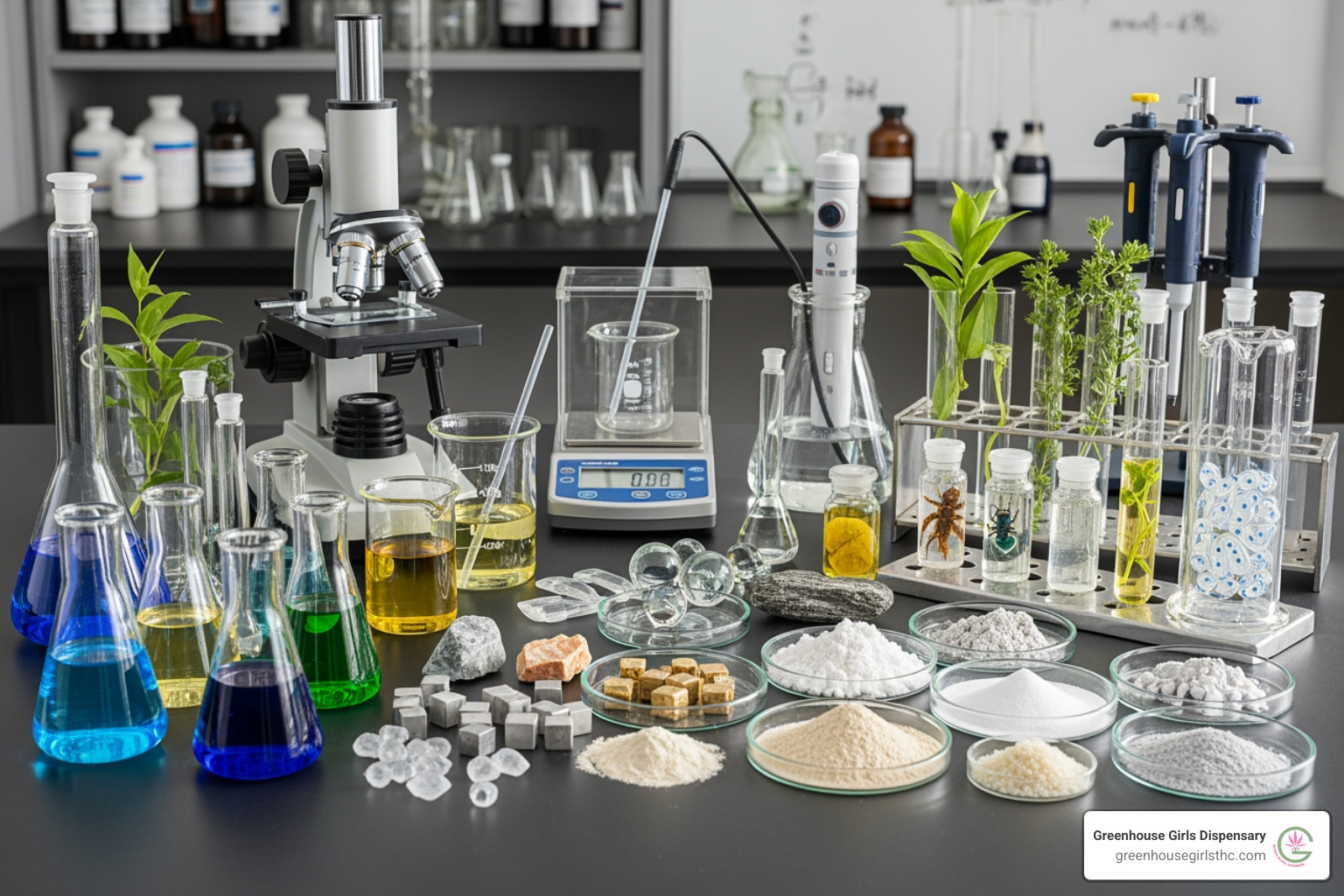
At their core, these laboratories provide a range of specialized services. Chemical analysis is fundamental, identifying the precise composition of a substance, detecting impurities, or quantifying active ingredients. This is vital for everything from ensuring the right amount of cannabinoids in our flower and gummies to confirming the purity of pharmaceutical compounds. Microbiology testing screens for harmful bacteria, molds, and pathogens, safeguarding public health in food, cosmetics, and cannabis products.
Beyond chemical and microbial checks, materials characterization examines the physical and chemical properties of materials, crucial for industries developing new products or improving existing ones. Physical properties testing assesses attributes like strength, durability, or melting points. Together, these core services form the foundation upon which countless products are built and verified.
The reliance on these services is incredibly broad. From the food we eat to the medicines we take, and the environment we live in, analytical testing is everywhere. It’s the unseen work that helps ensure our safety and trust in the products around us.
What are the primary services offered by an analytical testing laboratory?
Here are some of the specific services you'd find in a top-tier analytical testing laboratory:
- Chemical Composition Analysis: Labs use sophisticated techniques to determine the exact chemical makeup of a sample. For us at Greenhouse Girls, this means precisely quantifying cannabinoids like THCa and Delta-9 THC in our flower and gummies, ensuring accurate labeling and potency for our customers in Palm Harbor, Oldsmar, and beyond.
- Trace Contaminant Detection: Detects "what shouldn't be in it." This includes heavy metals, pesticides, residual solvents, mycotoxins (like aflatoxins), and other unwanted substances, which is crucial for clean, safe products.
- Microbiological Screening: Checks for the presence of harmful microorganisms such as bacteria (e.g., Salmonella, E. coli), yeasts, and molds. For products consumed orally, like our edibles, this is non-negotiable for consumer safety.
- Nutritional Analysis: For food and beverage products, determines caloric content, macronutrients (fats, proteins, carbohydrates), vitamins, and minerals, allowing for accurate nutritional labeling.
- Failure Analysis: When a product doesn't perform as expected, labs can investigate the root cause, helping manufacturers improve design, materials, or processes.
- Method Development: When standard testing methods don't exist for a unique product or contaminant, an experienced analytical testing laboratory can develop and validate custom testing protocols.
Which Industries Rely on Analytical Testing?
The reach of analytical testing laboratory services extends across nearly every sector:
- Pharmaceutical & Biotechnology: Driven by stringent regulatory requirements for drug findy, development, and manufacturing, from purity analysis of active pharmaceutical ingredients (APIs) to stability testing.
- Food & Beverage: Analytical testing ensures safety, quality, and regulatory compliance, including testing for contaminants, allergens, nutritional content, and shelf-life.
- Environmental Testing: Labs analyze water, soil, and air for pollutants, ensuring compliance with environmental regulations and supporting remediation efforts.
- Consumer Products & Cosmetics: Verifies product safety, ingredient claims, and compliance with consumer protection laws.
- Cannabis: The cannabis industry, both hemp-derived and marijuana-derived, relies heavily on analytical testing laboratories to verify potency, screen for contaminants (pesticides, heavy metals, residual solvents, microbes), and ensure product safety and compliance with state regulations. As we explore in our guide, A Practical Guide to Lab-Tested Cannabis, independent lab testing is the cornerstone of consumer trust in this rapidly evolving market.
The Pillars of Accuracy: Ensuring Trustworthy Results
Accuracy and reliability are not just buzzwords in analytical testing; they are the bedrock of trust. When we send our hemp-derived products for testing, we rely on the results to ensure our flower and gummies meet our high standards and legal requirements. An analytical testing laboratory must go to great lengths to ensure every result is precise, repeatable, and defensible.

This commitment to accuracy is built on several key pillars:
- Quality Assurance/Quality Control (QA/QC): QA establishes the framework and procedures, while QC involves the day-to-day operational checks, like running control samples and blanks, to monitor the reliability of results.
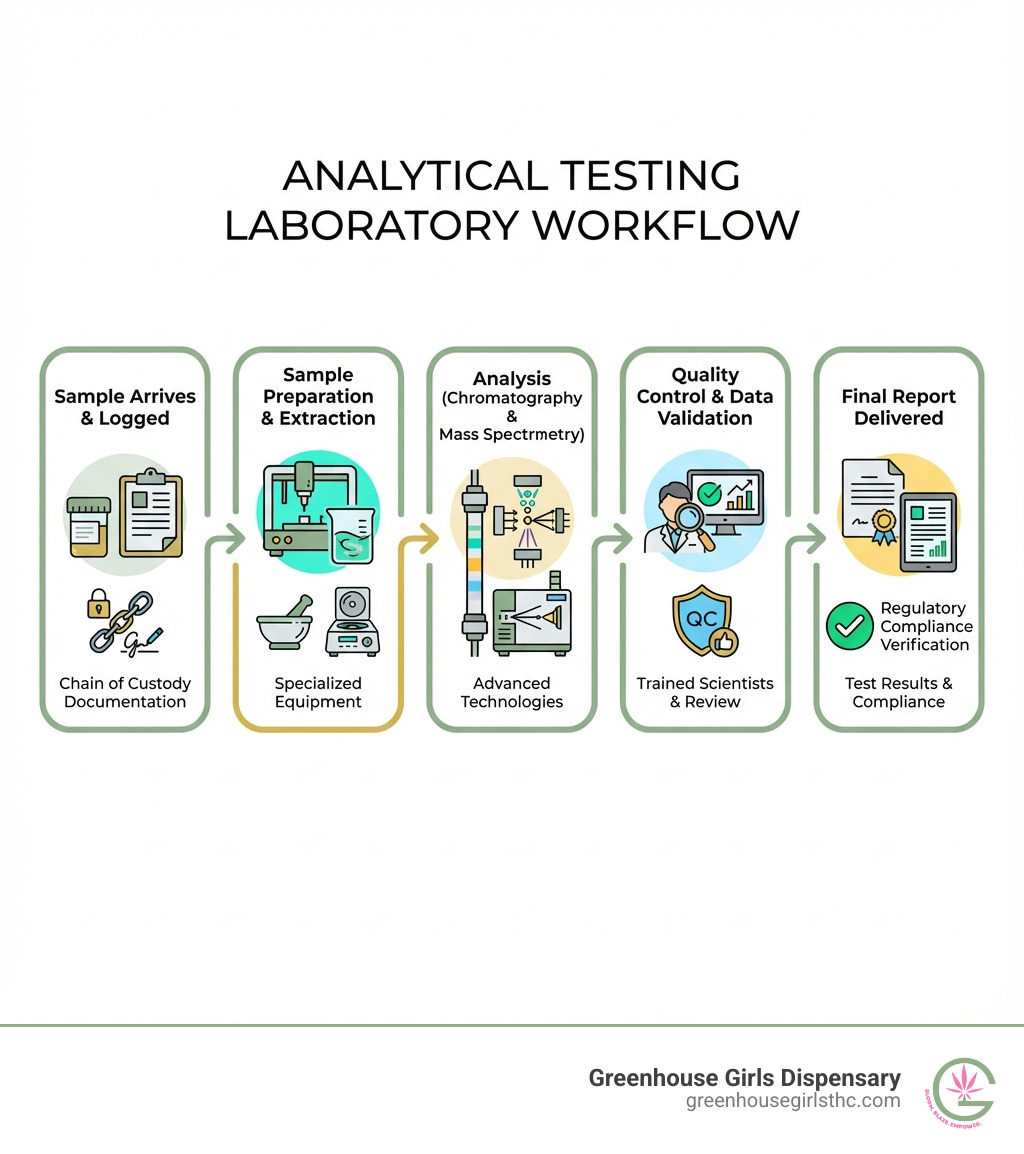
- Standard Operating Procedures (SOPs): Every step in a testing process, from sample reception to data reporting, is documented in SOPs. This ensures consistency, reduces human error, and allows for traceability.
- Instrument Calibration: Analytical instruments need regular calibration with certified reference materials so their measurements remain accurate over time.
- Staff Expertise and Training: The best equipment is useless without skilled staff. Laboratories invest heavily in training chemists, microbiologists, and technicians so they are proficient in their techniques and understand the underlying science.
Key Accreditations and Certifications to Look For
Accreditations and certifications are external validations of a lab's competence and commitment to quality. Here are the essential ones to look for when selecting an analytical testing laboratory:
- ISO/IEC 17025: The global standard for testing and calibration laboratories. It signifies technical competence and the ability to produce precise and accurate test and calibration data.
- Good Laboratory Practice (GLP): A set of principles that provides a framework for non-clinical studies to ensure the quality and integrity of data submitted to regulatory authorities.
- Good Manufacturing Practice (cGMP): While primarily for manufacturing facilities, some analytical labs adhere to cGMP principles, especially when testing pharmaceutical products.
- NELAP (National Environmental Laboratory Accreditation Program): For environmental testing, this accreditation helps ensure labs meet rigorous standards for analyzing environmental samples.
- FDA Registration: Labs testing products regulated by the FDA, such as food, pharmaceuticals, and cosmetics, should be FDA registered.
- State-Specific Accreditations: Depending on the industry and location, state-specific licenses or accreditations might be required. In Florida, for example, cannabis testing labs must meet specific state requirements.
How Labs Guarantee Data Integrity
Beyond accreditations, a robust analytical testing laboratory employs several practices to protect the integrity of the data it produces:
- Method Validation: Before a test method is used for routine analysis, it is validated to ensure it is fit for its intended purpose. This confirms accuracy, precision, sensitivity, and specificity.
- Chain of Custody (COC) Protocols: This documentation process tracks a sample from collection to final disposal, recording every person who handled it and when. This unbroken trail supports sample integrity and helps prevent tampering.
- Regular Proficiency Testing: Labs participate in blind proficiency testing programs where they analyze unknown samples and compare their results against a consensus value from other labs.
- Documented Methodologies (ASTM, EPA): Labs follow internationally recognized methodologies from organizations like ASTM (American Society for Testing and Materials) and EPA (Environmental Protection Agency). These standardized methods support consistency and comparability of results.
- Peer Review of Results: Before a final report is issued, results often undergo internal peer review by senior scientists, adding another layer of quality control.
Inside the Modern Analytical Testing Laboratory: Technology and Specialization
Step inside a modern analytical testing laboratory, and you'll see a high-tech environment where advanced instruments deliver unprecedented sensitivity, precision, and speed. Today's labs are equipped with tools that can detect substances at incredibly low concentrations, analyze complex mixtures, and provide detailed structural information that once required far more time and effort.
These capabilities are vital for identifying trace contaminants in cannabis products or confirming the purity of pharmaceutical compounds. Data processing and automation also play a major role, streamlining workflows, reducing human error, and improving turnaround times.
Advanced Technologies and Methodologies
The toolkit of a modern analytical testing laboratory includes:
-
Chromatography (GC, LC, UPLC): Techniques that separate complex mixtures into their individual components.
- Gas Chromatography (GC): Ideal for volatile compounds, often coupled with Mass Spectrometry (GC/MS) for identification.
- Liquid Chromatography (LC): Suited for non-volatile compounds, including cannabinoids, and can be High-Performance (HPLC) or Ultra-Performance (UPLC) for faster, more efficient separations.
- Mass Spectrometry (GC/MS, LC/MS, ICP/MS): Identifies compounds by measuring their mass-to-charge ratio. This is powerful for confirming active ingredients, detecting pesticides, or identifying unknown contaminants. Inductively Coupled Plasma Mass Spectrometry (ICP/MS) is especially useful for detecting heavy metals at ultra-trace levels.
-
Spectroscopy (FTIR, UV-Vis, AAS): Methods that analyze how substances interact with light to determine composition or concentration.
- Fourier-Transform Infrared (FTIR) Spectroscopy: Identifies functional groups and chemical bonds, useful for material identification.
- Ultraviolet-Visible (UV-Vis) Spectroscopy: Quantifies substances that absorb light in the UV or visible range.
- Atomic Absorption Spectroscopy (AAS): Measures the concentration of specific metal elements.
-
Microscopy (SEM, TEM): For visualizing structures at a microscopic level.
- Scanning Electron Microscopy (SEM): Provides high-resolution images of surfaces and can be coupled with EDX for elemental analysis.
- Transmission Electron Microscopy (TEM): Offers even higher resolution, allowing visualization of internal structures.
-
Thermal Analysis (DSC, TGA): Techniques that study how materials change with temperature.
- Differential Scanning Calorimetry (DSC): Measures heat flow associated with transitions like melting or crystallization.
- Thermogravimetric Analysis (TGA): Measures mass changes as a function of temperature, useful for determining composition or thermal stability.
Specialized Testing for Emerging Contaminants like PFAS
The world of analytical testing is constantly evolving, with new challenges emerging regularly. One significant area of focus is specialized testing for emerging contaminants, particularly substances like PFAS.
PFAS, or per- and polyfluoroalkyl substances, are often referred to as "forever chemicals" because of their extreme persistence in the environment and in our bodies. They are found in many everyday products and have become a major environmental and health concern. Detecting these compounds requires highly specialized capabilities from an analytical testing laboratory.
Leading labs offer advanced PFAS analysis, including methods like EPA Method 533, a standard for PFAS analysis in drinking water, and the Total Oxidizable Precursors (TOP) assay, which can detect PFAS precursors that might otherwise go unnoticed. While the Massachusetts PFAS cleanup rule is specific to that state, the issue of PFAS contamination is a national concern, impacting environmental health and regulatory discussions across the U.S., including here in Florida.
The Lab's Role in Business: From R&D to Regulatory Success
An analytical testing laboratory is far more than just a service provider; it's a strategic partner that can influence a business's success, particularly in navigating the journey from product conception to market launch. For businesses like Greenhouse Girls, these labs help develop high-quality products, mitigate risks, and ensure we meet the regulatory expectations of the cannabis industry. They function as an extension of quality control and R&D, providing the scientific insights needed to make informed decisions throughout the product lifecycle.
Supporting Product Development and R&D
In research and development, an analytical testing laboratory acts as a guide, supporting innovation and continuous improvement.
- Product Deformulation (Reverse Engineering): Labs can deconstruct a product to identify its ingredients and their proportions. This helps companies understand market trends and refine or differentiate their own formulations.
- Competitor Product Analysis: By analyzing competitor products, businesses can identify strengths and weaknesses, using that knowledge to improve quality, safety, or unique characteristics.
- Failure Analysis to Improve Design: When a product fails, whether it's a packaging issue or a stability problem with an extract, labs can pinpoint the cause. This feedback loop allows for design improvements and helps prevent future issues.
- Material Selection: Labs can test various raw materials for purity, compatibility, and performance. For our hemp-derived cannabis products, this means verifying the quality of the flower from our small family farms before it reaches our facilities.
As we emphasize in Why Your Weed Needs a Check-Up: The Importance of Cannabis Analysis, robust analytical testing is not just about compliance; it's about continuous improvement and innovation.
Upholding Quality Control and Regulatory Compliance
An analytical testing laboratory is also central to product quality and regulatory compliance.
- Lot-to-Lot Consistency Testing: For consistent product quality, every batch needs to meet the same specifications. Labs help confirm that each lot of flower, prerolls, or gummies delivers a reliable experience.
- Contaminant Screening (Heavy Metals, Pesticides): Labs screen for harmful substances like heavy metals (e.g., lead, mercury), pesticides, residual solvents, and mycotoxins. This is especially vital for cannabis, where contaminants can be concentrated in the final product.
- Allergen Testing: For food and beverage products, labs identify common allergens, helping to prevent serious health risks for consumers.
- Regulatory Support: Regulations such as REACH (Registration, Evaluation, Authorisation and Restriction of Chemicals), RoHS (Restriction of Hazardous Substances), and California's Proposition 65 address the use and disclosure of certain chemicals. While these specific regulations might not all apply to our products in Florida, the principle of ensuring compliance with applicable local, state, and federal laws is paramount. The expertise of an analytical testing laboratory is crucial for understanding and meeting complex legal frameworks.
At Greenhouse Girls, the importance of lab verification for consumer safety is central to our product sourcing. We believe that consumers in Palm Harbor, Oldsmar, Tampa, Saint Petersburg, New Port Richey, Tarpon Springs, Holiday, and across Florida and the United States deserve to know exactly what they're consuming. This is why we partner with reputable analytical testing laboratories to ensure our federally legal, lab-tested, hemp-derived cannabis products (THCa flower, Delta 9 gummies, prerolls, and more) are safe, potent, and compliant. As we explore in Don't Guess, Get Tested: A Guide to Lab Verified THCA, verification is essential for trust.
Choosing Your Partner: How to Select the Right Lab
Selecting the right analytical testing laboratory is a critical business decision that can affect product quality, market reputation, and regulatory compliance. It's not just about finding someone who can run a test; it's about choosing a partner that fits your needs and values.
| Differentiator | Description |
|---|---|
| Turnaround Time (TAT) | How quickly the lab can deliver results. |
| Pricing Structure | The cost of services, including any rush fees or bundled packages. |
| Range of Services | The breadth of tests and industries the lab can support. |
| Consultative Approach | Whether the lab provides expert guidance and interpretation, or just raw data. |
Finding the ideal analytical testing laboratory isn't just about finding the cheapest option or the one closest to our locations in Palm Harbor or Oldsmar. It's about finding a partner that aligns with values of quality, safety, and transparency. Here are some key differentiators to consider:
- Turnaround Time (TAT): Waiting too long for results can slow production or delay product launches. Some labs offer next business-day results for certain tests, while others have a standard TAT of several business days with rush services available for an additional charge. Always clarify both standard TAT and rush options.
- Pricing Models: Competitive pricing matters, but so does clarity. Ask what is included in the quote, whether there are added fees, and how shipping or sample kits are handled.
- Customer Service and Technical Support: A lab that offers strong technical support and responsive customer service can be invaluable, especially when interpreting complex results or troubleshooting issues.
- The "One-Stop-Shop" Benefit: A full-service lab that can handle a wide range of testing needs can save time, simplify logistics, and support consistency across different product types.
What sets one analytical testing laboratory apart from another?
Beyond the basics, several factors can truly differentiate an analytical testing laboratory:
- Consultative Approach vs. Data-Only: Some labs simply deliver raw data. Others provide interpretation, context, and strategic guidance. For a business seeking to improve products or steer complex regulations, this expert partnership can be especially valuable.
- Specialized Expertise in Niche Industries: While many labs offer broad services, some have deep expertise in specific areas, such as cannabis, pharmaceuticals, or environmental testing. For us, a lab with experience in cannabis testing is a priority.
- Scale and Service Model: Larger organizations may offer extensive capabilities and multiple locations, while smaller local labs may provide more personalized service and faster regional logistics. The right fit depends on your footprint and priorities.
- Rush Service Availability: The ability to get rapid results when needed can be a major advantage. Labs that clearly communicate their rush options and limitations are easier to integrate into business planning.
- Integrated Digital Platforms for Results: Modern labs often provide secure online portals for sample submission, tracking, and result delivery, improving efficiency, transparency, and data management.
Conclusion: Your Partner in Quality and Compliance
As we've explored the analytical testing laboratory, it becomes clear that these facilities are indispensable partners in ensuring product quality, safety, and regulatory compliance across virtually every industry. From the food on our tables to the medicines that heal us, and especially the cannabis products we cherish, the work of these labs underpins consumer trust and market integrity.
They empower businesses with data that drives innovation, mitigates risks, and supports market access. For Greenhouse Girls Dispensary, partnering with a reliable analytical testing laboratory is fundamental to our mission. It allows us to confidently offer federally legal, lab-tested, hemp-derived cannabis products like our premium THCa flower, potent Delta 9 gummies, and convenient prerolls to our community in Palm Harbor, Oldsmar, Tampa, Saint Petersburg, New Port Richey, Tarpon Springs, Holiday, and beyond, with nationwide shipping throughout the United States.
When you choose a product from Greenhouse Girls—whether it's our popular flower shake deals, 25MG D9 or 50MG D8 gummies, or our carefully crafted prerolls—you are choosing a product backed by science. We're proud to offer high-quality, legal cannabis alternatives, currently with a free Baby Jay preroll or gummy with your first visit.
The value of a reliable testing partner cannot be overstated. They are guardians of your brand's reputation and protectors of your consumers' well-being. By understanding the core services, pillars of accuracy, advanced technologies, and key differentiators of an analytical testing laboratory, you are better equipped to find the ideal scientific ally for your business.
To learn more about cannabis products and why verified testing is essential, explore our insights on hemp-derived vs. marijuana-derived cannabis.