Understanding THC Carts: What They Are and Why They Matter
THC carts are one of the most popular ways to consume cannabis today. These small, pre-filled cartridges contain concentrated cannabis oil that attaches to a battery-powered vape pen. When heated, the oil vaporizes for inhalation, offering a discreet and convenient alternative to smoking flower.
Key features of THC carts include:
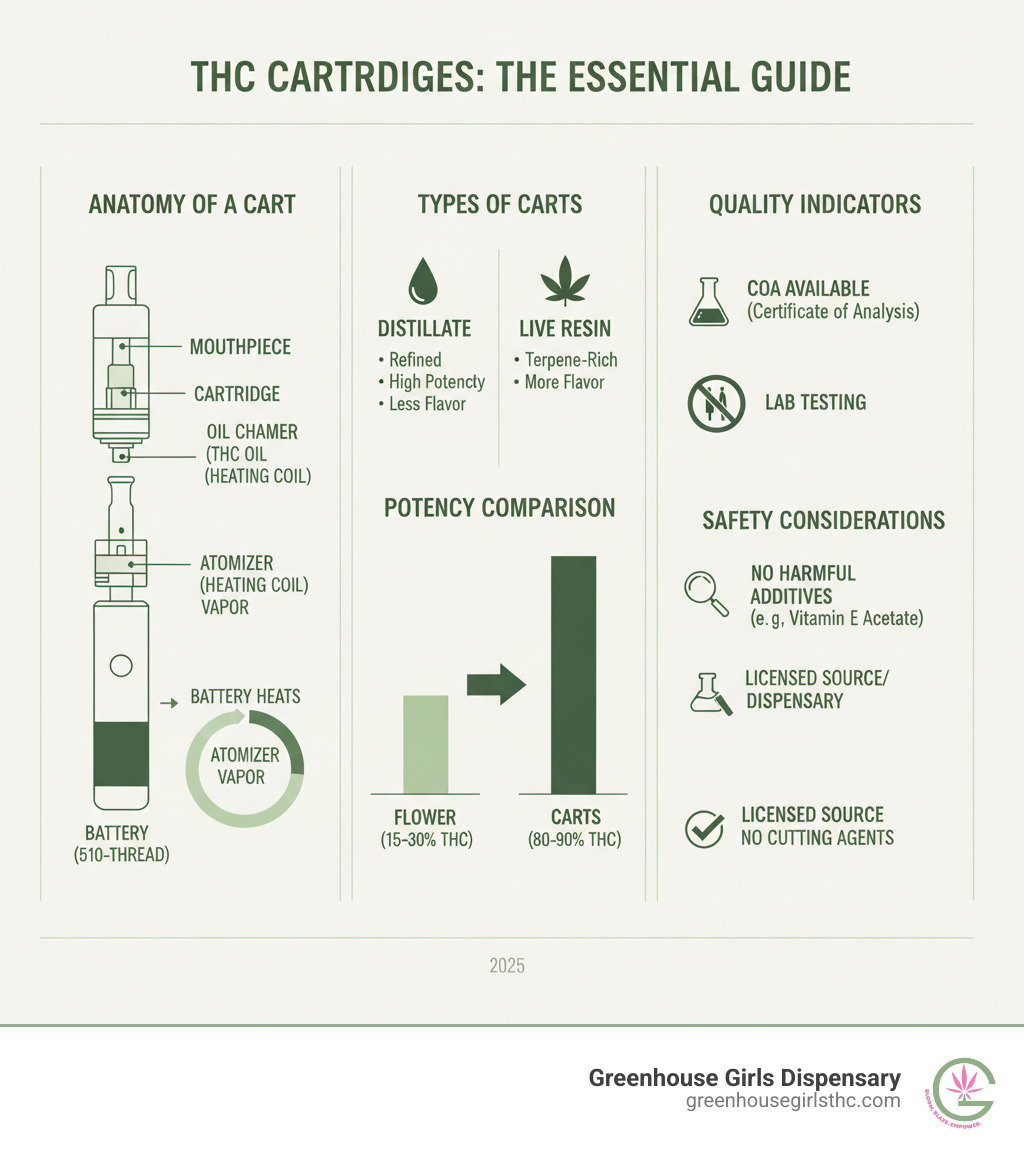
- High Potency: Carts often contain 80-90% THC, far more than the 15-30% THC in typical cannabis flower. This means a few puffs can be much stronger than a joint.
- Convenience: They are portable, fast-acting, and produce minimal odor.
- Types: The main varieties are high-potency Distillate and terpene-rich Live Resin.
- Risks: Potential dangers include lung injuries (EVALI) from illicit products, high tolerance or dependency, and mental health effects from high THC doses.
This convenience has fueled a surge in vaping's popularity, but it also raises questions about safety and quality. The high potency increases the risk of overconsumption, especially for new users. Furthermore, the unregulated market poses serious health threats. The CDC has linked vaping to EVALI (e-cigarette or vaping use-associated lung injury), often caused by additives like vitamin E acetate in black market carts.
This guide will walk you through everything you need to know about THC carts—from how they work to choosing safe, high-quality products. I'm Selena Jochumsen, and my work in cannabis education is focused on helping you use products like THC carts safely and responsibly.
What Are THC Carts and How Do They Work?
THC carts work through a simple mechanic: they heat concentrated cannabis oil to create vapor, not smoke. This process avoids combustion, resulting in a smoother inhale without the ash or lingering smell of smoking.
A vape battery powers a small heating element (atomizer) inside the cartridge. When you inhale, the atomizer vaporizes the oil for a quick and discreet experience.
There are two main systems:
- Disposable vapes are all-in-one units that are discarded once the oil is gone.
- Reusable systems feature a rechargeable battery and replaceable cartridges. Most use a standard "510-thread" connection, allowing you to use cartridges from various brands with a single battery.
The Anatomy of a Vape: Cartridge, Battery, and Oil
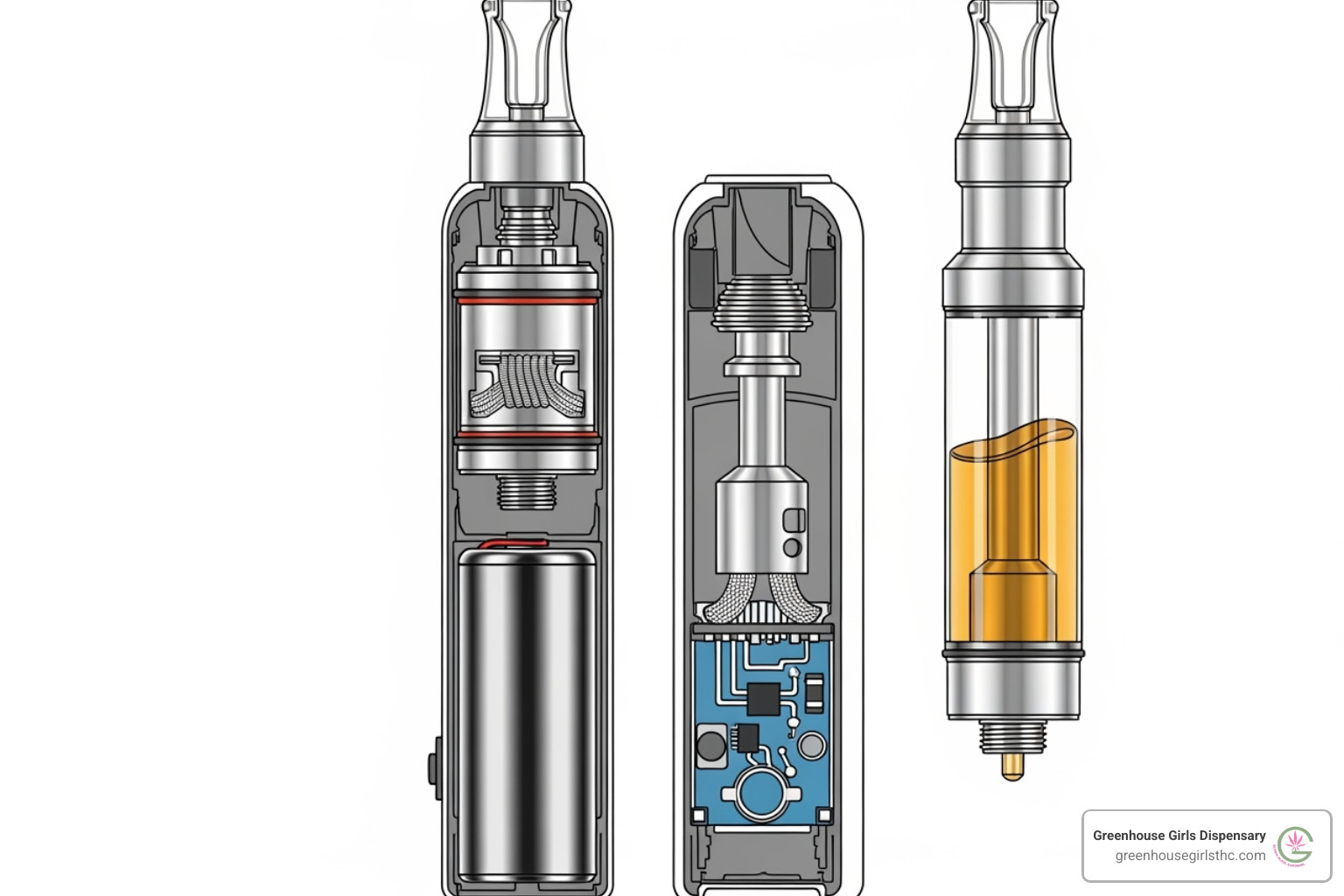
A vape pen consists of three main parts that work together:
The Cartridge: This is the container (usually glass or plastic) holding the cannabis oil. It includes the mouthpiece for inhaling, a chamber for the oil, and the atomizer (heating coil) at the base. Quality carts often use ceramic coils for better flavor and even heating.
The Cannabis Oil: This concentrated extract contains high levels of THC, other cannabinoids, and terpenes, which provide the strain's unique flavor and aroma. Oil quality can vary significantly between products.
The Battery: This rechargeable power source heats the oil. Batteries can be inhale-activated (heating automatically when you draw) or button-activated. Button-activated models may offer adjustable temperature settings for more control over flavor and vapor.
Understanding these components helps you choose the right THC carts and batteries for your preferences. For a broader look at cannabis products, see our definitive guide to hemp-derived cannabis.
Common Ingredients and What to Avoid
The quality of what's inside your THC carts is critical for safety. A high-quality cart should only contain two ingredients: cannabis oil (the THC-rich extract) and terpenes (for flavor and aroma), preferably derived from the cannabis plant itself.
However, some manufacturers, particularly in the unregulated market, use cutting agents to dilute the oil, which can be extremely dangerous. Be sure to avoid:
- Vitamin E Acetate: The CDC directly linked this additive to EVALI (e-cigarette or vaping use-associated lung injury), a severe and sometimes fatal lung condition. Avoid it at all costs.
- Propylene Glycol (PG) and Vegetable Glycerin (VG): Common in nicotine e-liquids, these can break down into carcinogens like formaldehyde when heated to high temperatures.
- MCT Oil: While safe to ingest, inhaling this oil can lead to lipid pneumonia because the lungs cannot process the fats.
The safest THC carts contain only pure cannabis oil and natural terpenes. This is why lab testing is essential to verify a product's purity. To learn how to read these reports, check out our practical guide to lab-tested cannabis.
Distillate vs. Live Resin: What's the Difference?
When choosing THC carts, you'll mainly encounter two types: distillate and live resin. Though both are potent, they offer different experiences.
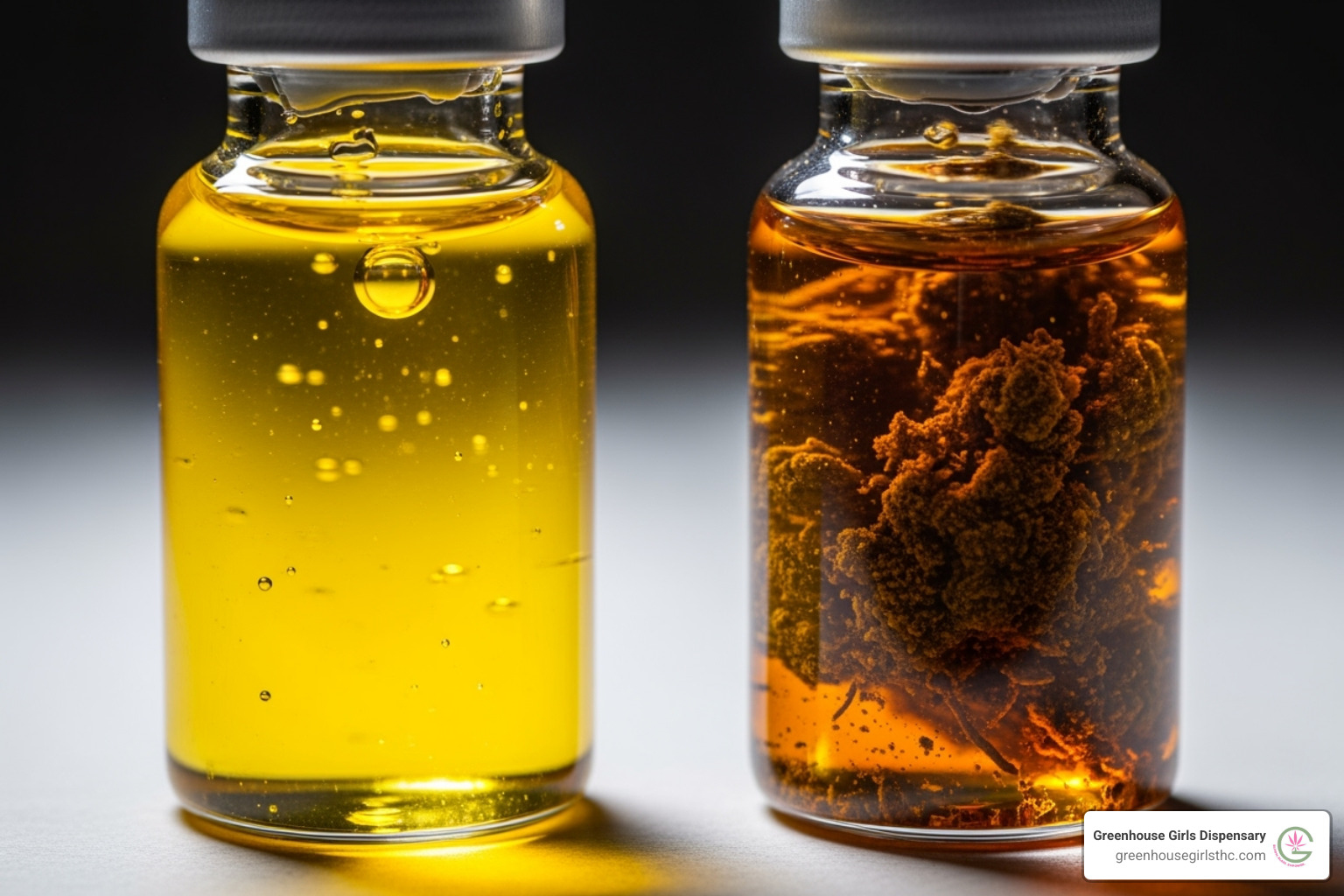
Distillate is focused on purity and potency. This highly refined oil contains exceptionally high THC levels (80-90%+) because the extraction process strips away most other compounds, including natural terpenes. Flavor is reintroduced later, often using botanical terpenes, which results in a wide variety of flavor options. The effects are powerful and THC-forward but can feel less nuanced.
Live resin prioritizes preserving the full profile of the original cannabis plant. It's made by flash-freezing the plant at harvest, which protects the delicate terpenes that are lost during traditional drying and curing. The result is an authentic flavor and aroma that reflects the source strain. While THC levels may be slightly lower than distillate, the rich terpene content is believed to produce a more complex, well-rounded high due to the entourage effect (the synergy between cannabinoids and terpenes).
The Choice: Go for distillate if you want maximum THC potency and diverse flavors. Choose live resin if you prefer authentic cannabis taste and a more nuanced experience. Learn more about these extracts in Beyond the Buzz: Understanding THC and THCA in Live Resin.
Vaping vs. Smoking: A Look at the Effects and Potency
Vaping THC carts and smoking flower are distinct experiences. Vaping offers greater discretion, as the vapor has a minimal odor that dissipates quickly compared to smoke. The flavor is also cleaner and more pronounced, especially with terpene-rich carts.
Both methods have a fast onset of effects (within minutes), but the primary difference is potency. THC carts often contain 80-90% THC, while flower typically has 15-30% THC. This massive concentration difference means vaping can feel much stronger, requiring careful dosage.
Here's a quick comparison:
| Feature | Vaping THC Carts | Smoking Cannabis Flower |
|---|---|---|
| Onset | Very fast (minutes) | Fast (minutes) |
| Duration | 1-3 hours | 1-3 hours |
| Potency | Very High (80-90% THC is common) | Moderate (15-30% THC is common) |
| Flavor | Clean, often intense and nuanced (terpene-rich) | Can be harsh, smoky, less nuanced |
| Odor | Minimal, dissipates quickly | Strong, lingering, easily detectable |
| Discretion | High | Low |
| Health Conc. | Lung irritation (from additives), EVALI risk, high THC potency | Respiratory irritants (tar, carcinogens), smoke exposure |
Why Vaping THC Can Feel Stronger
Vaping THC carts often feels stronger than smoking flower for a few key reasons:
- High THC Concentration: With 80-90% THC compared to flower's 15-30%, each puff delivers a much more concentrated dose of the psychoactive compound.
- Higher Bioavailability: Vaping is a highly efficient delivery method. The precise heating process creates a vapor that the lungs can absorb effectively, meaning more of the inhaled THC enters your bloodstream compared to smoking.
- Smoother Inhalation: Vapor is less harsh than smoke, which can lead people to take larger or more frequent puffs without realizing how much they are consuming. This makes it easy to overdo it.
These factors combined can lead to a surprisingly intense and rapid onset of effects. Always start with a small puff and wait to assess the effects before consuming more, especially if you are new to carts. Understanding the main psychoactive compound is key to responsible use; learn more about what is Delta-9 THC.
Immediate vs. Potential Long-Term Effects
Using THC carts produces both immediate and potential long-term effects.
Immediate effects appear within minutes and can include:
- Positive: Euphoria, relaxation, and altered sensory perception.
- Negative: Increased heart rate, impaired coordination, dry mouth, and red eyes. Never drive or operate machinery after vaping.
Potential long-term effects from regular, high-potency use are a serious consideration. These include tolerance build-up, requiring more THC to achieve the same effect, and potential dependency. Chronic use may also lead to lung irritation from inhaling heated oils and flavorings, as well as potential mental health impacts, which we will discuss in the next section.
Weighing the immediate benefits against these potential risks is crucial. Understanding how different cannabinoids work can also help you make better choices. Explore THC vs. CBD: What's the Difference & Which One's Right For You?.
The Health Risks Associated with THC Carts
Let's be real: while THC carts offer incredible convenience and discretion, they're not without risks. The unregulated market has created some serious dangers, and even legal products deserve careful consideration. Understanding these risks isn't about scaremongering—it's about empowering you to make informed choices that protect your health.
Lung Health, EVALI, and Respiratory Issues
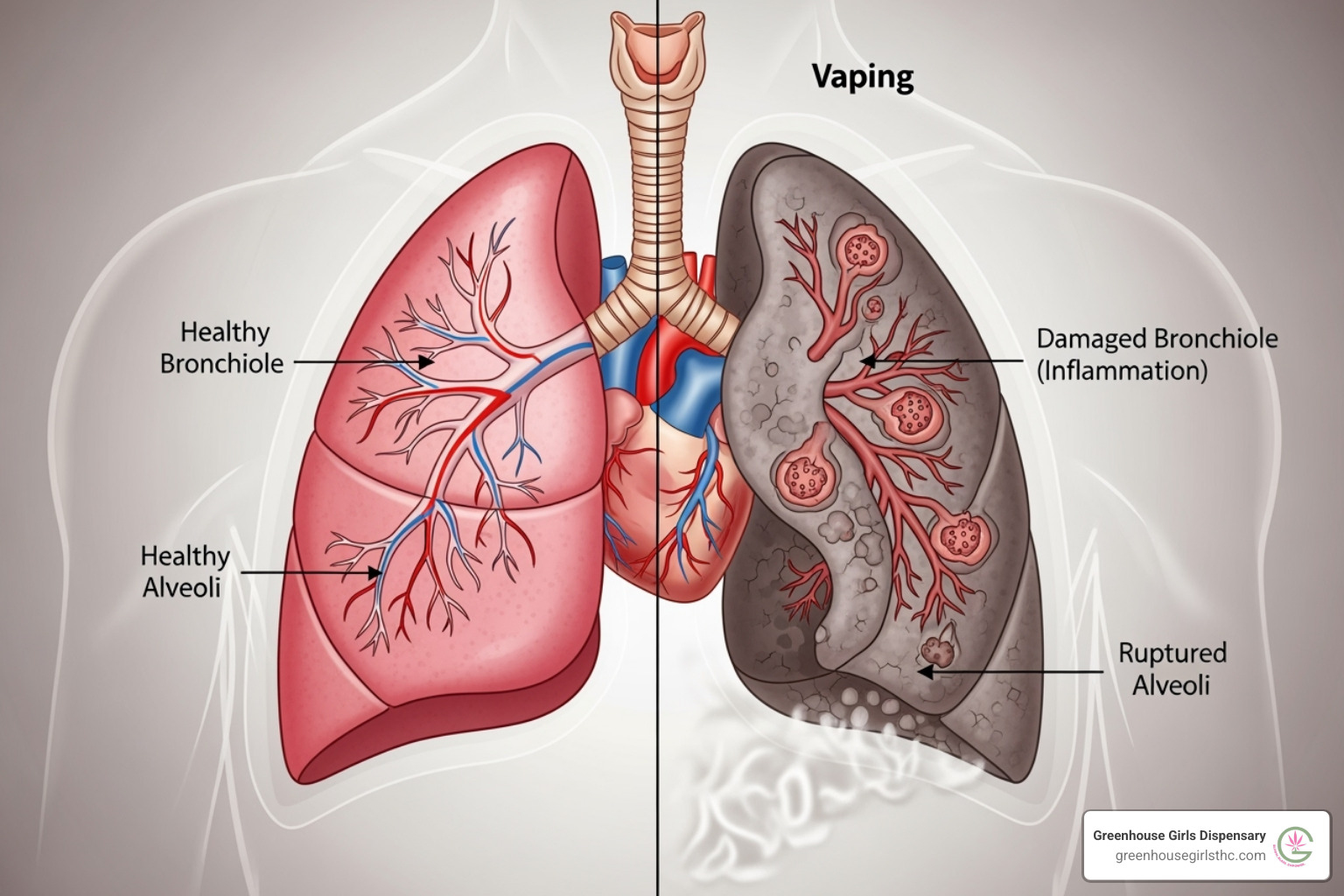
In 2019, a wave of severe lung injuries was linked to vaping, a condition the CDC named EVALI (e-cigarette or vaping use-associated lung injury). Patients experienced extreme respiratory distress, chest pain, and other severe symptoms, with some cases proving fatal.
The primary culprit was identified as Vitamin E acetate, a thickening agent used in illicit, black-market THC carts. When inhaled, this additive can cause severe lung inflammation. This findy underscores the critical importance of purchasing products only from licensed, reputable sources.
Even without such dangerous additives, vaping can still irritate the lungs. The respiratory system is not designed to handle inhaled oils, flavorings, and concentrated extracts. Regular vaping can lead to symptoms like a persistent cough, shortness of breath, or chest pain. While long-term effects are still under investigation, research suggests that even legal flavorings and thinning agents may break down into harmful compounds when heated. For more scientific details on vaping-related injuries, see this article from PMC NCBI.
Mental Health and High-Potency THC Carts
The high potency of THC carts (often 80-90% THC) can significantly impact mental health. High doses of THC can trigger intense anxiety and paranoia, even in experienced users. The smooth vapor makes it easy to consume too much, leading to an uncomfortably strong and frightening experience.
Regular use of high-potency products may lead to mood swings or irritability. In rare cases, very high doses can cause temporary psychosis, especially in vulnerable individuals. These risks are particularly acute for adolescents, as high-THC exposure can interfere with brain development.
For those with pre-existing mental health conditions like anxiety, depression, or schizophrenia, high-THC products can worsen symptoms. The effect of cannabis on mental health is highly individual.
Always start with a very small dose when using concentrated cannabis products. For guidance on starting safely, read our guide: New to Delta-9? Here's How to Start Safely and Smartly.
Addiction, Dependency, and Risks for Young People
It is possible to develop a dependency on cannabis, and the high potency and convenience of THC carts can increase this risk. Cannabis Use Disorder (CUD) is a medical condition characterized by problematic cannabis use that you find difficult to stop.
Signs of CUD include:
- Needing more THC to get the same effect (tolerance).
- Experiencing withdrawal symptoms (irritability, anxiety, sleep issues) when you stop.
- Using more than intended or being unable to cut back.
- Neglecting responsibilities due to cannabis use.
Young people are especially vulnerable to CUD because their brains are still developing. The discreet nature of THC carts makes them easy to hide and use frequently, which can accelerate the development of dependency. Even infrequent users are at risk of overconsumption due to low tolerance. Research suggests that in some ways, cannabis vaping may be more harmful to the respiratory system than nicotine vaping, as noted in this study on cannabis vaping harm.
If you recognize these signs in yourself or someone else, know that help is available. Seeking support is a sign of strength.
How to Choose Safe, Legal, and High-Quality Vapes
Navigating the market for THC carts can feel like a maze, especially with the proliferation of products and varying regulations. As consumers, it's our responsibility to exercise due diligence to ensure we're purchasing safe, legal, and high-quality products. The black market is rife with dangers, including mislabeled products, harmful cutting agents, and untested contaminants. Avoiding these red flags is crucial for your health.
The Importance of Lab Testing for Safe THC Carts
The most important step to ensure the safety of THC carts is to verify third-party lab testing. Reputable brands provide a Certificate of Analysis (COA) for their products, which confirms they have been tested by an independent laboratory. Never buy from a source that cannot provide a COA.
A COA should include:
- Potency Testing: Verifies the amount of THC, CBD, and other cannabinoids.
-
Contaminant Testing: This is crucial for safety and checks for:
- Pesticides
- Heavy Metals
- Residual Solvents
- Mycotoxins (from mold)
- Microbials (bacteria, yeast)
- Terpene Profile: Details the terpenes present, which influence flavor and effects.
Transparency is key to safety. For a detailed guide on reading these reports, see: Beyond the Buzz: What Your Cannabis Lab Test Results Really Mean.
Navigating Legality: Hemp-Derived vs. Marijuana Products
The legality of THC carts depends on whether the THC is derived from hemp or marijuana.
- Hemp-Derived THC: The 2018 Farm Bill federally legalized hemp, defined as cannabis containing less than 0.3% Delta-9 THC by dry weight. This allows for federally legal products containing hemp-derived cannabinoids like Delta-8 THC and THCA. These products can often be shipped nationwide, though state laws may vary.
- Marijuana-Derived THC: Products from cannabis plants with over 0.3% Delta-9 THC are federally illegal. They are only legal for sale in states with medical or recreational cannabis laws and must be purchased from state-licensed dispensaries.
Always check your local laws before purchasing. At Greenhouse Girls, we specialize in federally legal, lab-tested, hemp-derived cannabis products. To better understand the legal nuances, read our guide on THCA Legality: Your Guide to Federally Compliant Cannabis.
Where to Find Help for Cannabis Use Disorder
If you or someone you know is struggling with Cannabis Use Disorder (CUD), professional and non-judgmental help is available. Recognizing the problem is the first step.
Here are some resources for support:
- SAMHSA National Helpline: A free, confidential, 24/7 service for individuals and families facing substance use disorders. Call 1-800-662-4357 (HELP) for referrals to local treatment, support groups, and community organizations.
- Healthcare Providers: Your doctor can provide guidance and refer you to specialists or treatment programs.
- Therapy and Support Groups: Methods like Cognitive Behavioral Therapy (CBT) and groups such as Marijuana Anonymous offer effective strategies and community support.
- Local Addiction Treatment Centers: Search for dedicated centers in your community that offer programs for CUD.
Reaching out for help is a sign of strength. You don't have to steer recovery alone.
Conclusion: The Bottom Line on Vaping
THC carts have reshaped the cannabis experience, offering unparalleled convenience, discretion, and potency. For many, they are an ideal way to consume cannabis that fits a modern lifestyle.
However, this convenience comes with risks. The high THC concentration (80-90%) makes overconsumption easy and increases the potential for tolerance and dependency. As the EVALI crisis showed, unregulated products can pose severe health dangers. Your best protection is to be an informed consumer.
If you choose to vape, always prioritize safety: demand third-party lab tests (a COA), buy only from reputable sources, and understand the legality of hemp-derived vs. marijuana-derived products in your area.
At Greenhouse Girls, we are committed to safety and quality, offering federally legal, lab-tested, hemp-derived cannabis products you can trust. We specialize in high-quality flower, edibles (like our popular D9 and D8 gummies), and prerolls sourced from small family farms. Whether THC carts are right for you or you're curious about other options, we're here to help you make a choice that fits your wellness goals.
To experience our commitment to quality, we're offering a free Baby Jay or gummy with your first visit. Stop by our Palm Harbor or Oldsmar locations, or order online for nationwide shipping. To learn more about your options, explore The Definitive Guide to Hemp-Derived Cannabis.