Understanding Cannabis Edibles: What They Are and How They Work
Cannabis edible products are food or drink items infused with cannabinoids like THC (tetrahydrocannabinol) or CBD (cannabidiol). Unlike smoking or vaping, edibles offer a smokeless alternative that's discreet, convenient, and delivers effects that last significantly longer—but also take longer to kick in.
Key Facts About Cannabis Edibles:
- What they are: Foods or beverages infused with cannabis extracts containing THC, CBD, or other cannabinoids
- Common forms: Gummies, chocolates, baked goods, beverages, tinctures, and candies
- Onset time: 30 minutes to 2 hours (much slower than smoking)
- Duration: Effects can last 6-12 hours, with residual effects up to 24 hours
- Recommended starting dose: 2.5-5mg of THC for beginners
- How they work: Processed through digestion and metabolized by the liver, converting THC into a more potent form called 11-hydroxy-THC
In 2022, the US National Poison Data System reported about 6,000 calls for help after children under 13 ate cannabis edibles—a stark reminder that these products, while legal and popular, require informed handling and respect. Edibles have exploded in popularity since legalization efforts began, with one nationwide study showing that 1 in 3 cannabis users have tried them. They offer unique benefits like longer-lasting effects and lung-friendly consumption, but they also come with distinct challenges around dosing, delayed onset, and safety.
I'm Selena Jochumsen, and through my work with Greenhouse Girls and my involvement with the National Cannabis Industry Association's Hemp Committee, I've seen how proper education around cannabis edible products can transform someone's experience from anxiety-inducing to genuinely therapeutic. Let me guide you through everything you need to know to consume these products safely and enjoyably.

The Edible Effect: A Different Kind of Journey
When we talk about the effects of cannabis edibles, we're discussing a fundamentally different experience than smoking or vaping. The key lies in how our bodies process the cannabinoids. When you inhale cannabis, THC enters your bloodstream quickly through the lungs, leading to a rapid onset of effects that typically peak within minutes and last a few hours. It’s like a quick sprint.
However, with edibles, the journey is more like a marathon. When we ingest a cannabis edible, the cannabinoids don't immediately enter the bloodstream. Instead, they travel through our digestive system to the liver. This is where a fascinating process called the "first-pass effect" occurs. Our liver metabolizes the Delta-9 THC into a compound called 11-hydroxy-THC. This metabolite is more potent and has a longer half-life than Delta-9 THC, which is why edibles often produce a more intense, body-centered, and prolonged experience. This metabolic conversion is a major reason why the effects of edibles can be so different and often more profound than other consumption methods.
Understanding this metabolic pathway is crucial, as it directly impacts the onset, peak, and duration of the edible experience. It's why we always emphasize patience when consuming edibles – the wait is part of the journey!
Onset, Peak, and Duration
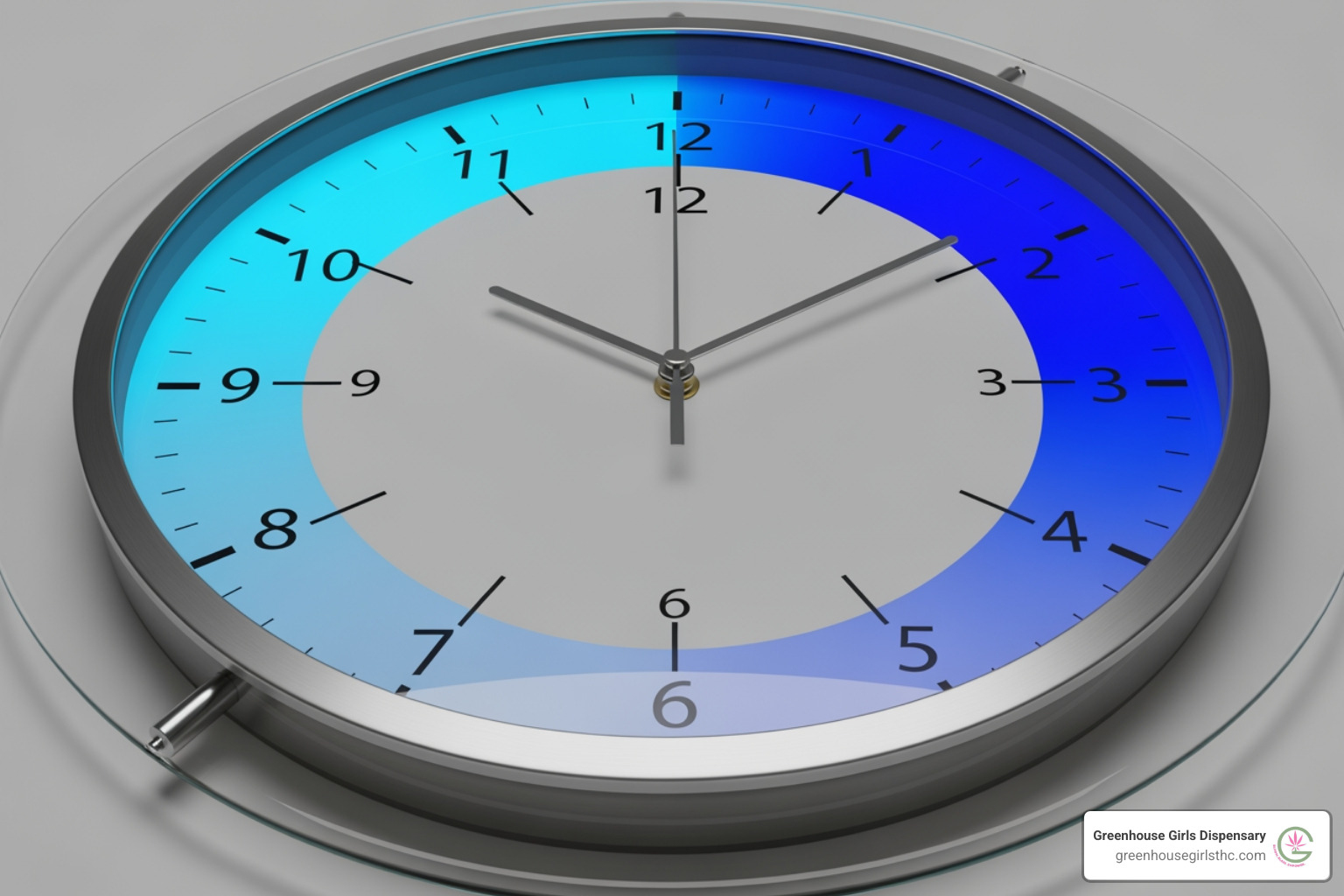
One of the most common mistakes people make with cannabis edibles is consuming too much because they don't feel the effects immediately. We understand the temptation to take another bite when nothing seems to be happening, but this can lead to an uncomfortable experience. The onset of effects for edibles can take anywhere from 30 minutes to two hours. This wide window depends on various factors, including our individual metabolism, whether we've eaten recently, and the specific composition of the edible itself.
Once the effects begin, they typically continue to build, reaching their peak around four hours after consumption. From there, the effects can last for an impressive six to twelve hours, with some individuals reporting residual effects, such as drowsiness, for up to 24 hours. This extended duration is a double-edged sword: it offers long-lasting relief or enjoyment, but it also means we need to plan our consumption carefully. Clear your schedule, find a comfortable and safe environment, and prepare for a sustained experience. Unlike smoking, where effects peak in about 30 minutes and wear off in a few hours, edibles demand a slower, more mindful approach.
The Role of Cannabinoids and Strains
The world of cannabis edibles is far more nuanced than just "getting high." The specific cannabinoids present in an edible, along with the terpene profile of the cannabis used, play a significant role in shaping the overall experience.
- THC vs. CBD: Tetrahydrocannabinol (THC) is the primary psychoactive compound responsible for the "high" associated with cannabis. Cannabidiol (CBD), on the other hand, is non-intoxicating and is often sought for its potential therapeutic benefits, such as relaxation or stress reduction, without the euphoria. Many edibles blend THC and CBD in various ratios (e.g., 1:1, 1:4) to create a more balanced effect, where CBD can often temper the intensity of THC.
- Minor Cannabinoids: Beyond THC and CBD, cannabis contains a wealth of other cannabinoids that contribute to the plant's diverse effects. Cannabinol (CBN), for instance, is often associated with sedative properties, making it a popular addition to edibles designed for sleep. Cannabigerol (CBG) is gaining attention for its potential to promote focus and energy, and some edibles are now formulated with CBG to offer a more uplifting or clear-headed experience.
-
Strain Types and Terpenes: While the concept of Indica, Sativa, and Hybrid strains is traditionally applied to smoked cannabis, these distinctions can still influence the effects of edibles, particularly when whole-plant extracts are used.
- Sativa-dominant edibles might lean towards more uplifting and energizing effects.
- Indica-dominant edibles are typically associated with relaxation and body-calming sensations.
- Hybrid edibles aim for a balance of both. However, it's not just the strain type, but also the terpenes—aromatic compounds found in cannabis—that contribute to the "entourage effect." Terpenes like Pinene might offer focus, while Myrcene could improve relaxation. Our Unlock the Secrets of Cannabinoid Gummies guide dives deeper into how these compounds work together to create unique experiences.
At Greenhouse Girls, we offer a range of hemp-derived Delta 9 gummies, including options like our 25mg Delta 9 and 50mg Delta 8 gummies, allowing our customers to explore different potencies and cannabinoid profiles to find what best suits their needs.
A User's Guide to the World of Edibles
The history of cannabis edibles is as rich and varied as the products we see on the shelves today. From ancient rituals to modern culinary innovations, humans have found countless ways to infuse cannabis into food and drink. In Eastern cultures, Bhang, a cannabis-infused drink, has been used in India since at least 1000 BC, playing a significant role in religious festivals like Holi. Around the 11th century, Berber tribes in North Africa created Majoun, a cannabis jam. These historical examples highlight the long-standing tradition of consuming cannabis orally for its effects.
In the Western world, modern interest in edibles was notably sparked by Alice B. Toklas's 1954 cookbook, which famously included a "Hashish Fudge" recipe, bringing cannabis-infused treats into the mainstream consciousness. Fast forward to today, and the evolution of edibles has been nothing short of astounding, moving far beyond simple brownies to a sophisticated array of products.
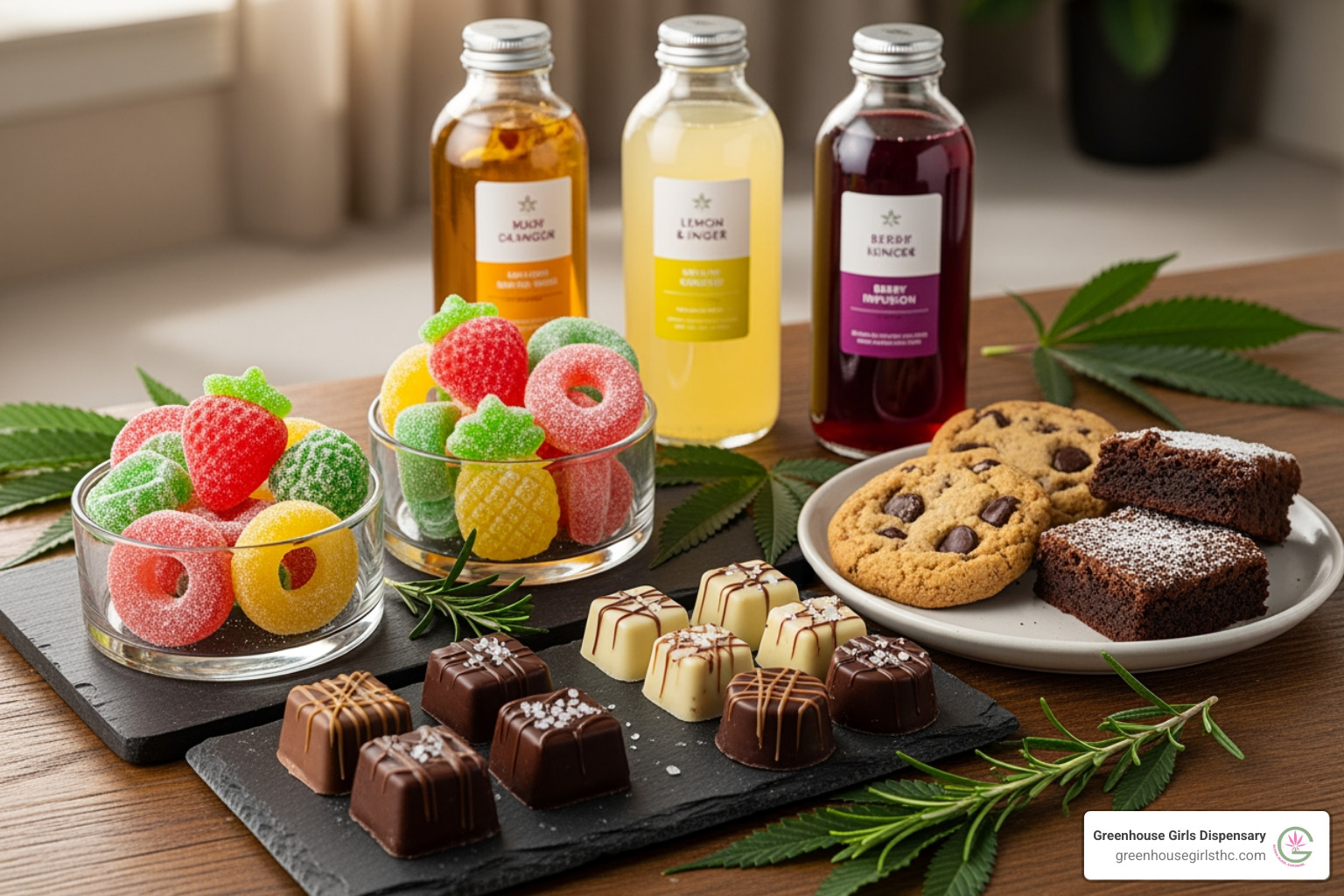
Common Types of Cannabis Edibles
The modern market for cannabis edibles is incredibly diverse, offering something for every palate and preference. We've seen a rapid expansion in the types of products available, making discreet and enjoyable consumption easier than ever.
- Gummies and Candies: These are arguably the most popular form of edibles, and for good reason. They're discreet, easy to dose, and come in a vast array of flavors and shapes. Our Delta 9 gummies at Greenhouse Girls, for example, are a customer favorite, offering precise dosing in a delicious package.
- Chocolates and Baked Goods: Classic cannabis brownies and cookies remain popular, alongside more gourmet chocolate bars and confections. These often offer a rich taste that can mask the cannabis flavor, making them appealing to many.
- Cannabis Beverages: The market for cannabis-infused drinks, sometimes called "liquid edibles" or "drinkables," is rapidly expanding. From sparkling THC seltzers to infused coffees and teas, these offer a refreshing and often faster-acting alternative, especially those utilizing nanoemulsion technology for quicker absorption. While they were a small portion of the market in 2014, drinks like THC seltzers are gaining significant traction.
- Tinctures and Oils: While not strictly food items, tinctures (alcohol-based extracts) and cannabis oils are often ingested orally, making them a part of the edible family. They offer versatility, as they can be added to food or drinks, or consumed sublingually for a quicker onset.
The Science of Making a Cannabis Edible
Creating an effective cannabis edible isn't as simple as sprinkling raw cannabis into your brownie mix. The science behind it involves a crucial chemical process called decarboxylation and then a careful infusion.
- Decarboxylation: Raw cannabis contains cannabinoid acids, such as THCA and CBDA, which are non-intoxicating. To activate their psychoactive or therapeutic properties, these acids must be heated. This process, known as decarboxylation, converts THCA into THC and CBDA into CBD. Without proper decarboxylation, your edible won't have the desired effects.
- Infusion Process: Once decarboxylated, the activated cannabinoids are fat-soluble, meaning they bind readily to fats. This is why the most common method for making edibles involves infusing cannabis into fatty ingredients like butter or oil. Cannabis butter, or "cannabutter," is made by gently heating decarboxylated cannabis with butter, allowing the cannabinoids to dissolve into the fat. This infused butter or oil can then be used as a base for a wide variety of recipes, from baked goods to savory dishes. The quality of the infusion directly impacts the potency and consistency of the final edible. As explored in "Building a better edible," Building a better edible, the science of making edibles is constantly evolving, with new techniques aimed at improving consistency, bioavailability, and flavor.
Safety, Dosing, and Responsible Consumption
While cannabis edibles offer a unique and often enjoyable way to consume cannabis, they also require a heightened sense of caution and responsibility. Because of their delayed onset and prolonged effects, it's easy to overconsume, leading to an uncomfortable experience. Our golden rule for edibles is always: "Start low and go slow."
How to Dose Your Cannabis Edible Safely
Dosing is paramount when it comes to cannabis edibles. Unlike inhaled cannabis, where effects are felt almost immediately, edibles have a significant delay, which can trick new users into taking more than they intended.
- Beginner Dose: If you're new to edibles or cannabis in general, we strongly recommend starting with a very low dose, no more than 2.5 mg of THC. Many experts suggest a starting range of 2.5 mg to 5 mg of THC. This allows us to gauge our individual sensitivity without becoming overwhelmed.
- The Waiting Game: After consuming your initial dose, be patient. Wait at least two hours, and ideally up to four hours, before considering taking more. The full effects can take time to manifest and peak. Consuming more too soon can lead to over-intoxication.
- Reading Labels: Always, always read the product label carefully. Legal and regulated edibles will clearly state the THC and other cannabinoid content per serving and per package. For example, our Greenhouse Girls Delta 9 gummies clearly indicate their 25mg Delta 9 and 50mg Delta 8 potencies. Pay attention to both numbers to avoid surprises.
- Potency per Serving vs. per Package: Be aware that a package of edibles might contain multiple servings. If a package contains 100mg of THC and is divided into 10 pieces, each piece is 10mg. If you're a beginner, you might want to start with half or a quarter of one of these pieces.
For more in-depth guidance on starting your edible journey, check out our guide: New to Delta 9? Here's How to Start Safely and Smartly.
Potential Risks and Side Effects
Even with careful dosing, it's important to be aware of the potential risks and side effects associated with cannabis edibles, especially from overconsumption. The delayed and more intense nature of edibles means that adverse reactions can be more pronounced.
- Overconsumption Symptoms: Taking too much THC can lead to uncomfortable and sometimes frightening experiences, including heightened anxiety, paranoia, confusion, disorientation, rapid heart rate, nausea, and even hallucinations. While there has never been a death related to the actual toxicity of cannabis, over-intoxication can be very distressing and may lead to emergency room visits.
- Impaired Coordination: Edibles can significantly impair motor skills, coordination, and balance, increasing the risk of accidents. We strongly advise against driving or operating heavy machinery after consuming edibles.
- Long-Term Use Considerations: Frequent or daily use of high-potency cannabis products, including edibles, can carry long-term risks. These include an increased risk of developing cannabis use disorder (addiction), and potential impacts on cognitive functions like learning, memory, and attention. Regular use can also exacerbate or trigger mental health issues like anxiety, depression, or psychosis in vulnerable individuals.
For a comprehensive overview of safety, we recommend reading: 7 Things You Need to Know about Edible Cannabis.
Safe Storage: Protecting Children and Pets
One of the most critical aspects of responsible cannabis edible consumption is safe storage. Edibles often resemble everyday candies, cookies, or drinks, making them dangerously appealing to children and pets who may not realize the difference. The statistics are sobering:
- In 2022, the US National Poison Data System reported approximately 6,000 calls for help after children under the age of 13 accidentally ate cannabis edibles.
- Children under 5 years old eating cannabis edibles were the largest source of marijuana-related calls to poison centers in 2021, accounting for 36% of such calls.
- While 65% of these incidents resulted in minor or no effects, almost 3% involved life-threatening symptoms, and about 20% led to hospitalization. Tragically, at least one child has died from eating THC gummies.
- It's not just children; calls to poison control have dramatically increased due to dogs ingesting edibles.
To prevent accidental ingestion, we urge all consumers to:
- Use Child-Resistant Packaging: Always keep edibles in their original, child-resistant packaging.
- Store Securely: Store all cannabis products, especially edibles, in a locked container or a place that is completely out of sight and reach of children and pets. Treat them like you would prescription medications or cleaning supplies.
- Educate Others: If you live with others, especially children or individuals who may not be familiar with cannabis, communicate the importance of safe storage.
The Legal Pantry: Understanding Edible Regulations
The legal landscape surrounding cannabis edibles can be complex, varying significantly between federal and state laws. However, for hemp-derived products, a clear framework exists thanks to the 2018 Farm Bill.
- The 2018 Farm Bill: This landmark federal legislation legalized hemp by removing it from the definition of marijuana under the Controlled Substances Act. Crucially, "hemp" is defined as cannabis plants containing no more than 0.3% Delta-9 THC on a dry weight basis. This distinction is what allows for the nationwide sale and shipping of hemp-derived cannabinoids, including Delta-9 THC edibles, as long as they adhere to this 0.3% threshold. This is why you can legally Buy THC Edibles Online in Florida: Yes, It's Legal! Here's How.
- Hemp-Derived Delta-9 THC: Products like our Delta 9 gummies at Greenhouse Girls leverage this federal legality. While they contain psychoactive Delta-9 THC, the total concentration of Delta-9 THC by dry weight remains below the 0.3% legal limit, making them federally compliant and legal to sell and ship across state lines, including throughout Florida and to other states where hemp products are permitted.
- Importance of Lab Testing and COAs: To ensure compliance and consumer safety, reputable retailers like Greenhouse Girls prioritize rigorous third-party lab testing. Every batch of our hemp-derived products, including THCa flower and Delta 9 gummies, comes with a Certificate of Analysis (COA). A COA verifies the cannabinoid content, ensuring the product meets the legal Delta-9 THC limit and is free from harmful contaminants like pesticides, heavy metals, and residual solvents. We believe in transparency and providing our customers with peace of mind.
Understanding this legal framework is key to navigating the market responsibly and confidently. For more details on the legality of hemp-derived products, explore our article: Why Hemp Gummies Get You High (And Why That's Legal).
Frequently Asked Questions about Cannabis Edibles
We often hear similar questions from our customers about cannabis edibles. Let's address some of the most common ones to help you feel more informed and confident.
How long do the effects of edibles last?
As we've discussed, the effects of cannabis edibles are notably long-lasting. Typically, you can expect the intoxicating effects to last anywhere from 6 to 12 hours. However, it's not uncommon for residual effects, such as mild drowsiness or a lingering sense of relaxation, to persist for up to 24 hours. This extended duration is due to the way THC is metabolized by the liver into 11-hydroxy-THC, a more potent and longer-acting compound. Factors like your individual metabolism, the dosage consumed, whether you've eaten recently, and the specific cannabinoid profile of the edible can all influence the exact timeline. Always plan accordingly and ensure you have no critical tasks or driving responsibilities for a full day after consumption.
What happens if my child or pet accidentally eats an edible?
Accidental ingestion of cannabis edibles by children or pets is a serious concern that can lead to significant health risks. If you suspect your child or pet has eaten an edible, it's crucial to act immediately:
- For Children: Contact your local poison control center or seek emergency medical attention (call 911) right away. Symptoms of cannabis intoxication in children can include lethargy, confusion, impaired coordination, vomiting, dizziness, rapid heart rate, and in severe cases, respiratory issues or seizures. These can be life-threatening. Provide as much information as possible about the product consumed (e.g., type of edible, approximate dosage).
- For Pets: Contact your veterinarian or an animal poison control hotline immediately. Dogs, in particular, are highly sensitive to THC. Symptoms can include lethargy, loss of balance, dilated pupils, drooling, vomiting, and in severe cases, tremors or seizures.
The best prevention is always secure storage. Keep all edibles in child-resistant packaging, locked away, and out of sight and reach of both children and curious pets.
Can you get addicted to cannabis edibles?
Yes, cannabis in any form, including cannabis edibles, can be addictive. While the risk varies among individuals, regular and frequent use, especially of high-potency products, can lead to the development of Cannabis Use Disorder (CUD). The younger someone starts using cannabis and the more frequently it's used, the greater the risk of developing a dependency. Signs of addiction can include an inability to cut down despite wanting to, spending a significant amount of time using cannabis, or experiencing withdrawal symptoms when trying to stop. If you or someone you know is struggling with cannabis use, resources are available to help. We encourage responsible consumption and urge anyone concerned about their usage to seek professional guidance.
Conclusion: Your Journey into Edibles Starts Here
We've explored the fascinating world of cannabis edibles, from their rich history and unique metabolic journey to the diverse types available and, crucially, the importance of safe and responsible consumption. Remember the core principles: "start low and go slow" with dosing, exercise patience as effects unfold, prioritize safety through secure storage, and understand the legal landscape that makes quality hemp-derived products accessible.
At Greenhouse Girls, we are committed to providing you with high-quality, lab-tested, federally legal, hemp-derived cannabis products. Whether you're in Palm Harbor, Oldsmar, Tampa, Saint Petersburg, New Port Richey, Tarpon Springs, Holiday, or anywhere else in Florida and beyond, we offer nationwide shipping to bring our premium selection directly to you. We pride ourselves on sourcing from small family farms, ensuring ethical practices and superior quality in everything from our THCa flower to our popular Delta 9 gummies.
We offer a wide range of products including Flower (especially our shake deals), Prerolls, Edibles (our 25mg Delta 9 and 50mg Delta 8 gummies are a hit!), Vapes, and even 420 Merch. To start your journey with us, we invite you to take advantage of our primary offer: a free preroll or gummy with your first visit!
Your adventure into the sweet science of edibles should be informed, enjoyable, and safe. We're here to guide you every step of the way. Visit us online or at one of our Florida locations to find our products and experience the Greenhouse Girls difference.
Buy THC Edibles Online in Florida: Yes, It's Legal! Here's How