Understanding THCA Extraction: From Raw Cannabis to Pure Concentrates
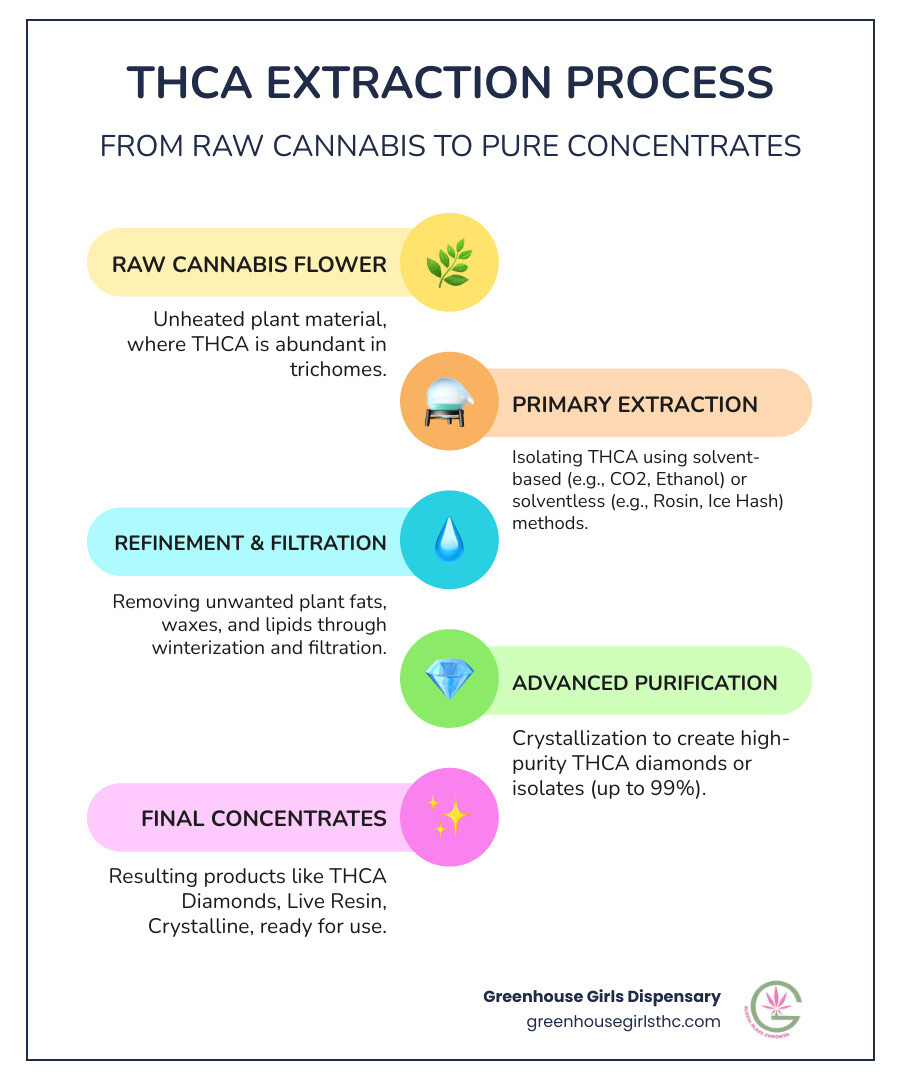
THCA extraction is the process of separating tetrahydrocannabinolic acid from cannabis to create concentrated products. This can be done using solvent-based methods (like butane, ethanol, or CO2) or solventless techniques (like ice water hash, dry sift, or rosin pressing). The goal is to isolate THCA while preserving beneficial compounds like terpenes and other cannabinoids.
Quick Overview of THCA Extraction Methods:
- Solvent-Based: Uses chemicals for higher yields but requires safety equipment.
- Solventless: Uses heat, pressure, or mechanical separation. Safer for home use but typically lower yields.
- Post-Processing: Winterization removes fats, while crystallization creates pure THCA diamonds up to 99% purity.
THCA is the non-psychoactive precursor to THC found in raw cannabis. Unlike THC, THCA won't get you high until it's heated through a process called decarboxylation. This happens when you smoke, vape, or bake cannabis products.
The extraction process matters because it determines the purity, potency, and safety of the final product. High-quality extraction preserves beneficial compounds while removing unwanted materials like plant fats and waxes.
I'm Selena Jochumsen, and through my work with Greenhouse Girls Dispensary and involvement with the Hemp Committee of the National Cannabis Industry Association, I've gained hands-on experience with these methods, ensuring our customers receive the highest quality, lab-tested concentrates available.
Understanding THCA and Its Place in Cannabis Science
Before exploring THCA extraction methods, it's important to understand the molecule itself. THCA, or Tetrahydrocannabinolic Acid, is the raw, non-psychoactive form of THC found in fresh cannabis trichomes. It's nearly identical to THC, but an extra carboxyl group prevents it from binding to brain receptors that cause a high. In short, raw THCA won't get you high.
Research suggests THCA may have anti-inflammatory and neuroprotective properties. It also plays a role in the Entourage Effect, where cannabinoids and terpenes work together for a greater effect than any single compound alone. This is why quality THCA extraction aims to preserve the full spectrum of these compounds. For more on raw THCA, see our Comprehensive Guide to THCA Flower.
The Science of Decarboxylation
Decarboxylation is the chemical reaction that turns THCA into psychoactive THC, triggered by heat or light. The process starts around 221–248°F (105–120°C). When you smoke or vape, this conversion is instant. For edibles, cannabis is often "decarbed" in an oven first to ensure all the THCA converts to THC for consistent potency.
Understanding these temperature thresholds is key to both THCA extraction and consumption. Different heating methods (smoking, vaping, baking) affect the conversion rate and which terpenes survive, influencing the final product's effects. Learn more about THCA's legal status in The A-to-Z of THCA: What It Is, What It Does, and Where It Stands Legally.
Solvent-Based THCA Extraction: The Chemical Approach
Solvent-based THCA extraction uses chemicals to dissolve and separate cannabinoids and terpenes from plant material. The main appeal is efficiency and high yields, but it's not without risks. Working with flammable or pressurized solvents requires professional training, safety equipment, and proper ventilation. A critical final step is purging all residual solvents to ensure product safety.
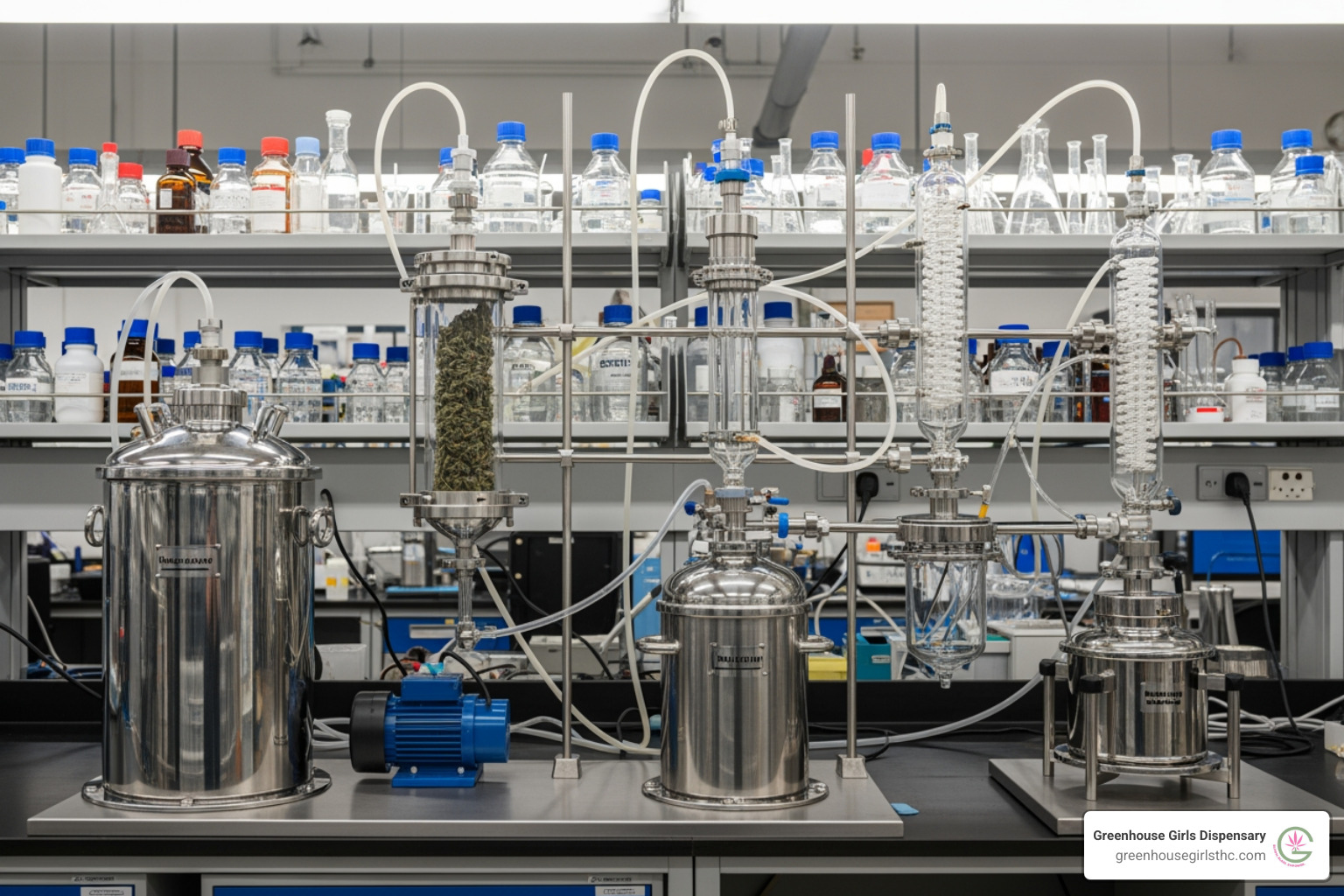
The choice of solvent greatly affects the purity, potency, and flavor of the concentrate. Some preserve delicate terpenes, while others maximize cannabinoid content.
| Feature | Solvent-Based Extraction | Solventless Extraction |
|---|---|---|
| Method | Uses chemical solvents (e.g., butane, ethanol, CO2) | Uses physical methods (e.g., heat, pressure, ice water) |
| Yield | Generally higher yields and efficiency | Often lower yields, more labor-intensive |
| Purity Potential | High purity possible with proper post-processing | High purity, often preserves more terpenes |
| Safety | Requires specialized equipment, ventilation, and training due to flammable/hazardous solvents | Generally safer, suitable for home use (e.g., rosin press) |
| Equipment Cost | High (closed-loop systems, vacuum ovens) | Variable (simple presses to advanced ice water systems) |
| Residuals | Risk of residual solvents; requires thorough purging | No chemical solvents, so no residual solvent risk |
| Product Examples | Shatter, wax, live resin, distillate, isolate | Rosin, dry sift, ice water hash (bubble hash) |
Butane Hash Oil (BHO) and Propane Hash Oil (PHO)
Hydrocarbon solvents like butane and propane are highly efficient at extracting THCA and terpenes, creating potent concentrates like shatter, wax, and budder. However, butane is extremely flammable. Safe extraction demands closed-loop systems in professional labs with explosion-proof equipment. This is not a DIY project.
Ethanol Extraction
Ethanol is a workhorse for large-scale production due to its high efficiency and scalability. It's considered "Generally Recognized as Safe" (GRAS) by the FDA. Its main drawback is that it also pulls water-soluble compounds like chlorophyll. To fix this, a post-extraction step called winterization is used. The extract is chilled, causing fats and waxes to solidify so they can be filtered out, resulting in a cleaner product.
Supercritical CO2 Extraction
CO2 extraction is a clean, sophisticated, but expensive method. It uses carbon dioxide in a "supercritical" state (acting as both a liquid and gas) to extract compounds. It's a "tunable solvent," meaning extractors can adjust pressure and temperature to target specific cannabinoids or terpenes. This method excels at terpene preservation and leaves no residual solvents. The main barrier is the high equipment cost, making it primarily a commercial-scale option. This aligns with scientific research on extraction methods that emphasize technique on final product quality.
At Greenhouse Girls Dispensary, we know that quality starting material and expert processing are what matter most, which is why we source from small family farms and ensure all products are lab-tested.
Solventless THCA Extraction: The Natural Method
For those who prefer a natural approach, solventless THCA extraction methods are ideal. These techniques use physical processes like mechanical separation, heat, and pressure, avoiding chemicals entirely. The result is a pure concentrate celebrated for its incredible preservation of terpenes—the aromatic compounds behind cannabis's unique flavors and smells. This philosophy aligns with the craft approach we detail in The Craft of Cannabis: Why Small-Batch THCA Delivers Superior Potency and Purity.
While solventless methods can be more labor-intensive and yield less, the peace of mind from a chemical-free product is a major draw. Innovations like those in the Solvent-Free THCA Extraction Process patent are also making these methods more efficient.
Ice Water Hash (Bubble Hash)
This classic solventless method uses ice-cold water to make cannabis trichomes brittle. The plant material is agitated in the water, causing the trichomes to snap off. This mixture is then filtered through a series of "micron bags" with progressively finer screens, separating the trichomes from the plant matter. The highest quality, known as full-melt bubble hash, is so pure it melts completely when heated, leaving almost no residue.
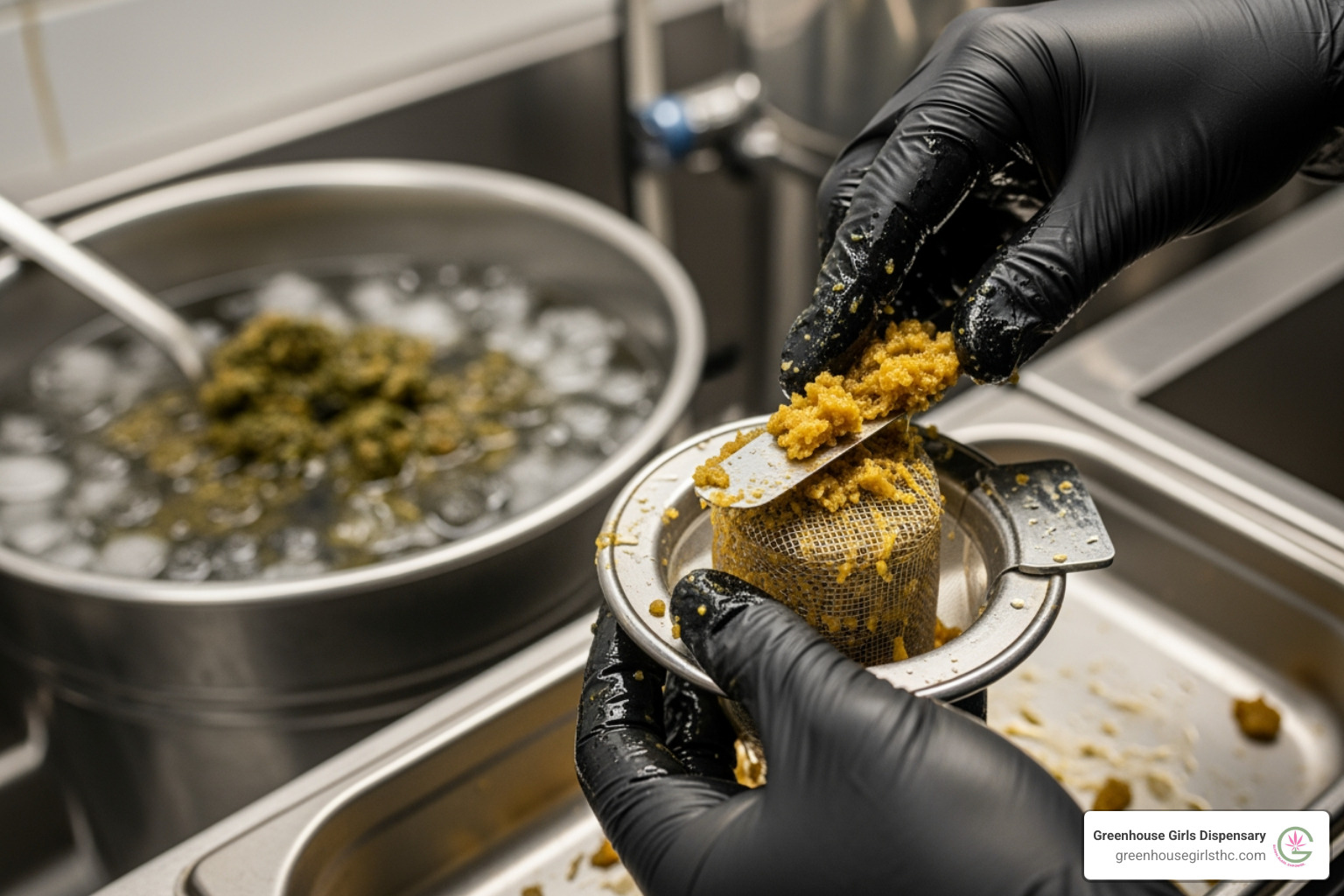
Dry Sift (Kief)
Dry sifting is the simplest solventless technique, producing what's commonly known as kief. Dried cannabis is agitated over fine mesh screens, allowing the tiny trichomes to fall through while larger plant material is left behind. The quality of dry sift varies based on the starting material and screen size. Purer sift is lighter and more golden, while greener sift contains more plant contaminants. It's a great, low-investment entry point into making concentrates.
Rosin Pressing
Rosin has become incredibly popular because it produces a clean, potent concentrate using only heat and pressure. Cannabis flower, kief, or hash is placed in a mesh bag and pressed between heated plates. The heat and pressure squeeze out the resinous sap, called rosin. Flower rosin is made from buds, while hash rosin (made from hash or kief) is considered higher quality. Rosin excels at preserving the plant's natural terpene profile, delivering rich, complex flavors that reflect the original strain and the Studies on full-spectrum benefits of the plant.
At Greenhouse Girls Dispensary, we appreciate the craft that goes into producing high-quality solventless concentrates. While we specialize in premium THCA flower, prerolls, and edibles, we understand that many of our customers are curious about concentrates and extraction methods.
From Crude to Crystal: Post-Extraction and Purification
The initial THCA extraction is just the first step. Post-extraction purification is what transforms crude extracts into the high-purity concentrates consumers love. These refinement steps remove unwanted compounds like plant fats and waxes, improve potency by concentrating the THCA, and create the different textures that define products like live resin, which we explore in Beyond the Buzz: Understanding THC and THCA in Live Resin.
Winterization and Filtration
Winterization is a key purification step, especially after ethanol extraction. The crude extract is dissolved in ethanol and chilled to sub-zero temperatures. This causes unwanted fats, lipids, and waxes to solidify, allowing them to be filtered out. The result is a cleaner, purer extract with better flavor and appearance. Further filtration can remove even smaller particles and pigments for a smoother final product.
Crystallization: Creating THCA Diamonds
Crystallization is the process used to create THCA diamonds—crystalline structures that can reach up to 99% purity. It begins with a highly refined THCA solution. The solvent is allowed to slowly evaporate in a controlled environment, causing THCA molecules to bond together and form large crystals. This slow process can take weeks but results in a product of unparalleled potency.
The World of THCA Concentrates
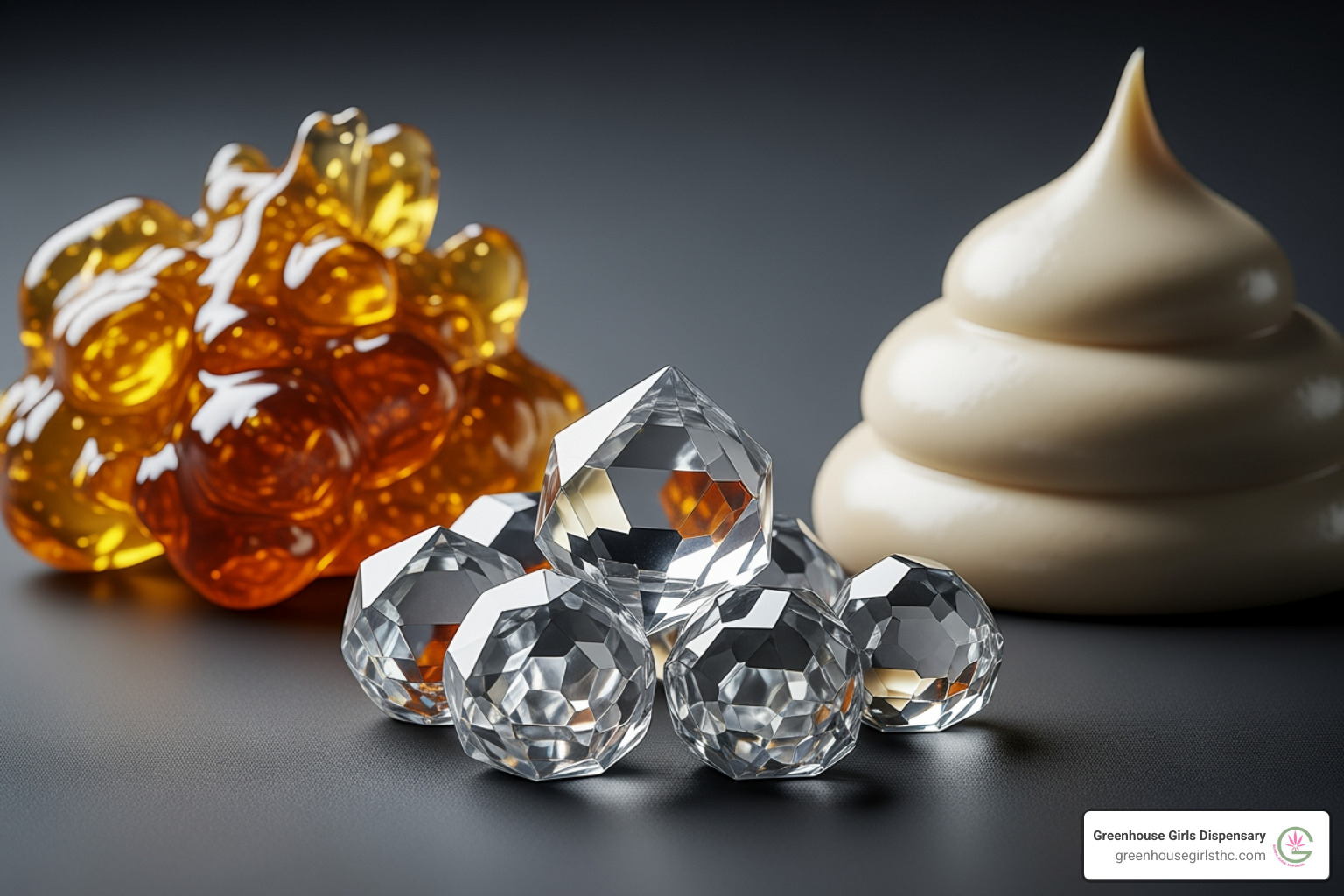
- THCA Diamonds: The pinnacle of potency, these are large crystals of nearly pure THCA, often sold in a terpene-rich "sauce."
- Live Resin: Made from flash-frozen cannabis to preserve the full, fresh terpene profile of the living plant.
- Sauce: A liquid concentrate prized for its high terpene content and intense flavor, often containing small THCA crystals.
- Badder/Budder: Has a soft, batter-like consistency created by whipping the extract, making it easy to handle.
- THCA Crystalline: Pure, isolated THCA (99%+) in a powder or crystal form with no flavor or aroma, perfect for precise dosing.
Is "THCA Distillate" Real?
Here's a question we get asked all the time: No, "THCA distillate" isn't actually a real thing. Distillation is a purification process that uses heat to vaporize and then condense a substance. Since heat causes decarboxylation, any attempt to distill THCA would convert it into THC. Therefore, you can have THC distillate, but not THCA distillate. The correct term for highly purified, solid THCA is THCA isolate or THCA crystalline. Be wary of products marketed as "THCA distillate," as it indicates a misunderstanding of the science.
At Greenhouse Girls Dispensary, we believe in transparency and education. All our products are lab-tested and accurately labeled, so you know exactly what you're consuming. And right now, we're offering a free Baby Jay with your first purchase!
Safe Consumption, Storage, and Legality
Knowing how to use, store, and understand the legality of THCA concentrates is as important as knowing how they're made. At Greenhouse Girls, we want our community—whether in Palm Harbor, Oldsmar, or ordering nationwide—to have the safest experience possible.
Safety Precautions
We cannot stress this enough: do not attempt solvent-based THCA extraction at home. These methods involve flammable chemicals and require professional labs with ventilation, safety protocols, and explosion-proof equipment. It is extremely dangerous.
Always look for a Certificate of Analysis (COA) from a third-party lab when buying concentrates. This document verifies potency testing and confirms the product is free of residual solvents and contaminants like pesticides or heavy metals. If a seller won't provide a COA, it's a major red flag. This commitment to safety is something we cover in The THCA Lowdown: Navigating Legality and Ensuring Safe Use.
How to Consume THCA Concentrates
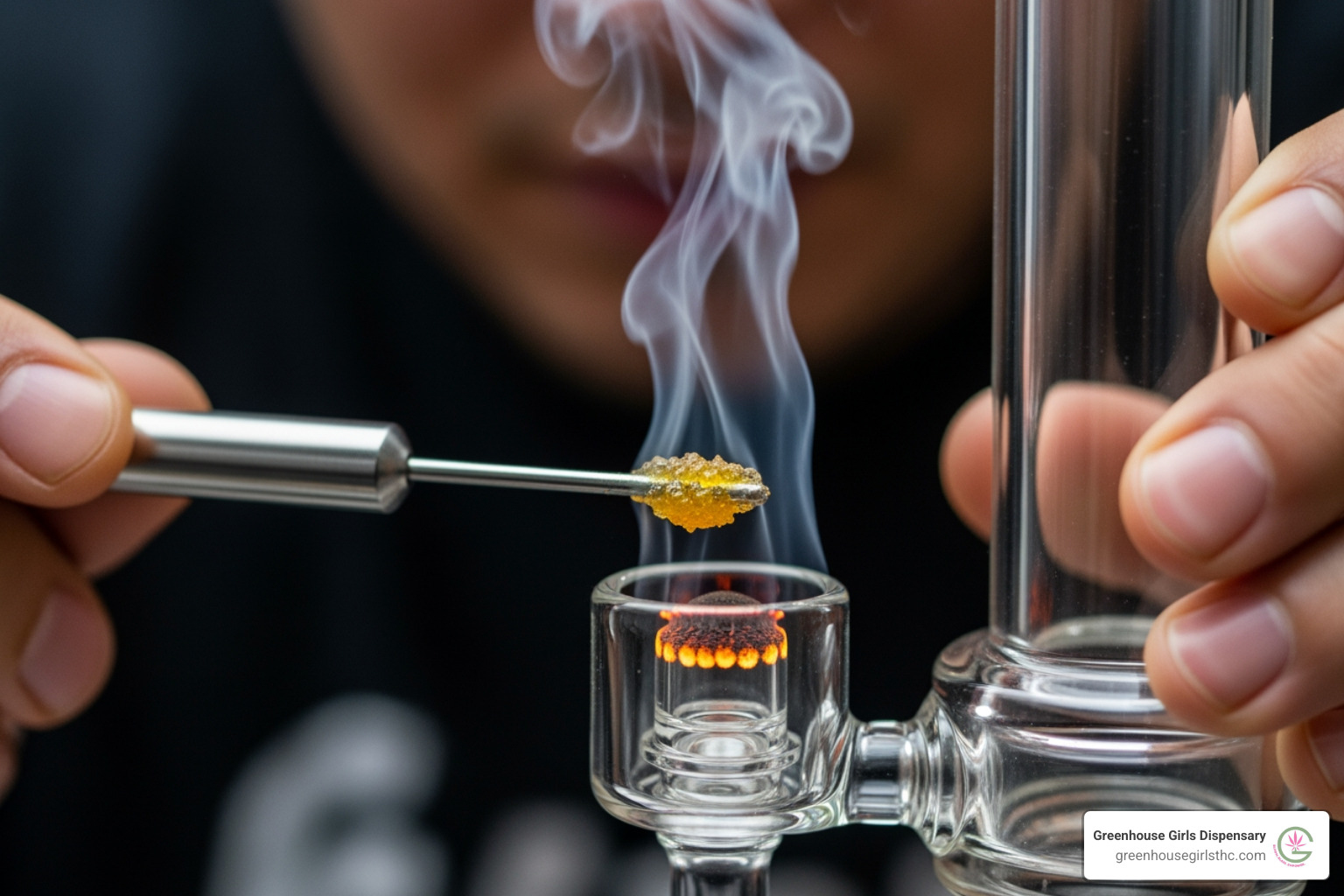
- Dabbing: The most popular method. A small amount of concentrate is vaporized on a hot surface ("nail") of a dab rig. The heat instantly converts THCA to THC for potent, fast-acting effects. An e-nail offers precise temperature control. For more tips, check out Dabbing Delight: Mastering THC Crumble.
- Vaporizing: Using a vape pen or vaporizer designed for concentrates provides a smooth, combustion-free experience.
- Topping flower: Sprinkle THCA crystalline or add a dab of sauce to flower in a bowl or joint for an extra potency boost.
- Edibles: Concentrates must be decarboxylated (heated) first to convert THCA to THC before being mixed into butter or oil for cooking. Start with a very small dose.
Storing Your Concentrates
Proper storage preserves cannabinoids and terpenes. Use airtight containers (glass or silicone) and keep them in a cool, dark place like a drawer or refrigerator. Heat, light, and oxygen degrade concentrates, reducing their potency and flavor over time. Proper storage keeps your product fresh for months.
The Legal Landscape of THCA
The 2018 Farm Bill federally legalized hemp-derived products containing less than 0.3% Delta-9 THC by dry weight. Since raw THCA is not Delta-9 THC, hemp-derived THCA products generally fall under this legal framework. However, state-by-state variations exist. Some states have adopted "total THC" laws, which calculate potential THC after decarboxylation, complicating the legal status. Always check your local regulations. For a deeper dive, read The Great THCA Divide: Where It's Legal and Where It's Not.
At Greenhouse Girls, we offer federally legal, lab-tested products and ship nationwide, but encourage customers to be aware of their local laws. New customers get a free Baby Jay or gummy with their first visit!
Frequently Asked Questions about THCA Extraction
We know THCA extraction can be a complex topic, so let's answer some common questions from our Greenhouse Girls community.
What is the easiest THCA extraction method for beginners?
For home extraction, always stick with solventless methods for safety.
- Dry sift is the most beginner-friendly. It involves sifting dried cannabis through screens to collect kief. The equipment is minimal, and there are no chemical risks.
- Rosin pressing is another great option. Using a personal rosin press, you apply heat and pressure to squeeze resin directly from flower or kief. It's solvent-free and straightforward.
While these methods have lower yields than professional solvent-based extractions, they are safe and perfect for learning the craft.
How do you make THCA more potent after extraction?
Increasing potency involves purification—removing everything that isn't THCA.
- Winterization chills the extract to solidify and filter out fats and waxes.
- Chromatography is an advanced lab technique that precisely separates THCA from other compounds.
- Crystallization is the ultimate purification method. By creating controlled conditions, THCA molecules form into highly pure crystals (THCA diamonds), which can reach up to 99% potency. These advanced steps are performed by professionals in a lab setting.
Does THCA show up on a drug test?
This is a critical question. The short answer is: Yes, consuming THCA products can lead to a positive drug test for THC.
Here's why: most drug tests screen for THC metabolites, not THCA itself. When you smoke, vape, or dab THCA, the heat instantly converts it into THC, which your body then metabolizes. Even if consumed raw, some conversion can occur in the body, and most THCA products contain trace amounts of Delta-9 THC that can accumulate over time.
If you are subject to drug testing for any reason, we strongly advise you to avoid all THCA and THC products. It is not worth the risk to your employment or legal standing.
Conclusion: The Future of Potency is Pure
We've journeyed through THCA extraction, from the science of decarboxylation to the specifics of solvent and solventless methods. We've seen how crude extracts are purified into stunning concentrates like THCA diamonds and learned why quality, safety, and testing are the pillars of any reputable product.
The cannabis industry is constantly innovating, with new techniques that improve terpene preservation and purification efficiency. We're excited by trends that favor sustainability and small-batch production, where quality always comes first.
At Greenhouse Girls Dispensary, this commitment to quality is our foundation. Serving our Florida communities in Palm Harbor, Oldsmar, Tampa, St. Petersburg, New Port Richey, Tarpon Springs, and Holiday—plus shipping nationwide—we provide federally legal, lab-tested hemp products from small family farms we trust. Our premium THCA flower, value-driven shake deals, and popular 25MG Delta-9 or 50MG Delta-8 gummies reflect the high standards we've discussed.
Whether you're looking for flower, prerolls, edibles, vapes, drinks, or 420 merch, you can trust that every product is made with care and transparency. New to Greenhouse Girls? We'll include a free Baby Jay preroll or gummy with your first visit! It's our way of welcoming you to the community. Ready to experience the difference? Explore the best THCA dabs online or visit us in Florida. The future of potency is pure, and it's waiting for you at Greenhouse Girls.